
Last updated November 16, 2026
 Sweep & inspection
 Caps & crowns
 Flue relining
 Masonry repair
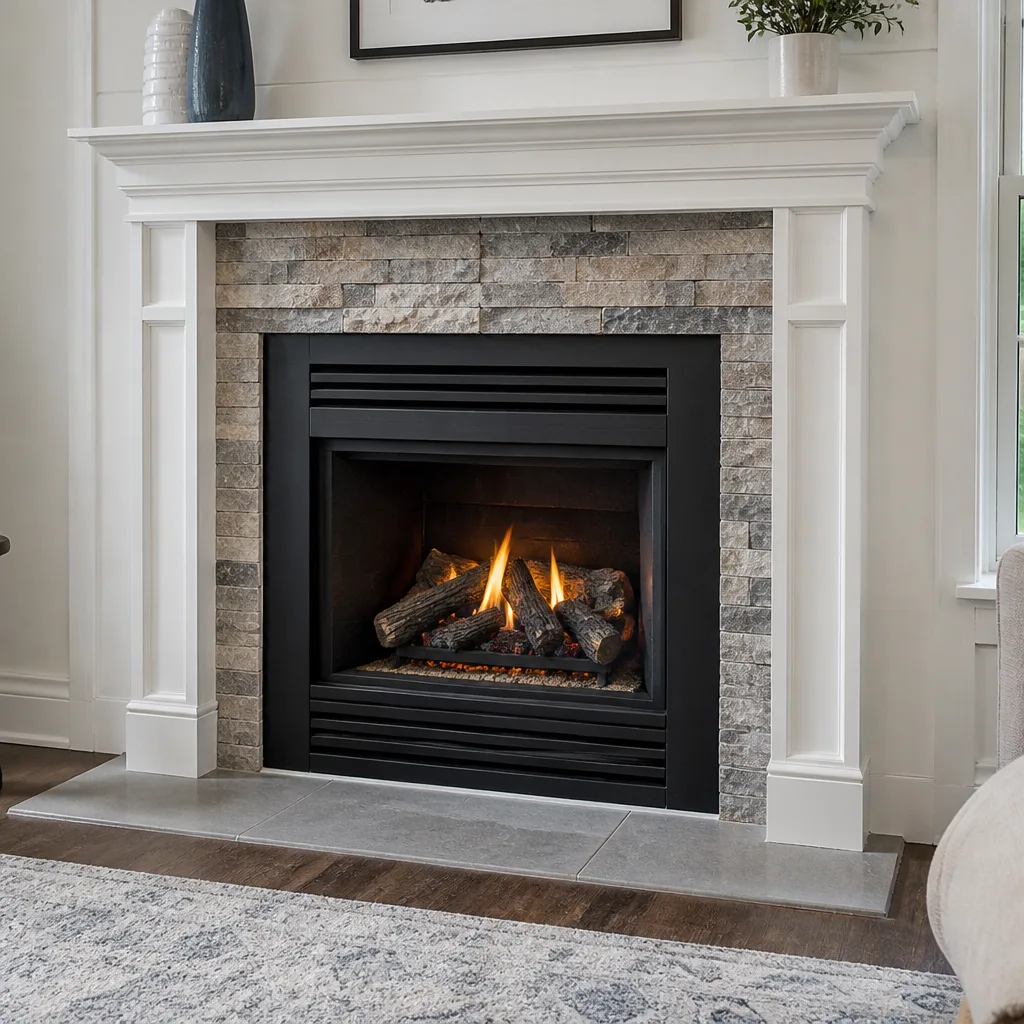 Gas fireplace service
Level 1 sweep and inspection to the NFPA 211 annual standard - flue, crown, cap, and flashing checked and photographed
Chimney sweep logs do not sweep chimneys. They loosen some creosote - which then falls where a brush and vacuum still have to collect it.
DIY vs Professional Chimney Cleaning: The Tracy Homeowner’s Decision Guide
Here’s the part most chimney companies won’t tell you: a homeowner with a brush, the right rods, and a free morning can remove the same surface creosote a professional removes from a straight flue. The difference between a DIY sweep and a professional one isn’t the scrubbing. It’s the seeing. The glaze pocket hiding at the smoke chamber transition, the hairline crack in a flue tile at the second offset, the joint that shifted out of alignment three feet above the damper, none of that shows up from where you’re standing with a flashlight pointed up. This guide draws the line honestly, telling you what DIY genuinely covers in Tracy and where the gap starts.
Quick Answer
DIY chimney cleaning is viable for a straight, accessible flue that needs only Stage 1 creosote removal and an annual visual check. A professional sweep is necessary when the flue has offsets, a smoke chamber you can’t inspect from below, visible glazed creosote, or any sign of a defect, because those conditions require a camera and mirror inspection that DIY can’t replicate. In Tracy, most homeowners land somewhere in the middle and benefit from a professional sweep-inspect workflow to establish a baseline before attempting any DIY maintenance.
Styles & brands we work with
- Sweep & inspection
- Caps & crowns
- Flue relining
- Masonry repair
- Gas fireplace service
Table of Contents
- What DIY Chimney Cleaning Can Legitimately Accomplish
- The Gap: What You Can’t See From the Firebox
- Why Tracy’s Burn Season Changes the DIY Calculus
- The Equipment Reality: What a DIY Kit Actually Costs
- A Realistic DIY Sweep: What the Process Looks Like
- Insurance and Liability When You Clean It Yourself
- When a Professional Sweep Is the Right Call
- Why Sweep, Inspect, and Repair Under One Roof Matters
What DIY Chimney Cleaning Can Legitimately Accomplish
We’re not going to pretend every chimney needs a professional. That would be dishonest, and it would waste your money. There’s a real category of chimney where a homeowner can do solid, competent maintenance: a straight vertical flue with no offsets, a cap that opens cleanly, a firebox you can reach, and creosote limited to the soft, fluffy Stage 1 variety. If your fireplace has seen light use and the flue looks clean from the damper up with a strong flashlight, DIY sweeping is a reasonable way to keep the surface clear between professional inspections.
What DIY cleaning actually removes is the flaky, soot-bound creosote that builds up on flue walls after a season of burning. A brush sized correctly to the flue, worked down from the top with proper rods, will pull that material off with reasonable efficiency. It’s genuine work, and it does improve draft and reduce fire risk in a chimney that starts from a clean baseline.
Here’s what DIY cleaning covers:
- Stage 1 creosote removal on accessible, straight flue walls – the soft, brushable deposit
- Loose soot removal from the firebox, smoke shelf, and damper area
- Debris clearing from a cap or crown that has collected leaves or nesting material
- A rough visual check of what’s visible from the firebox with a strong light, and of the flue top from the roof
What DIY cleaning does not cover is just as specific, and we’ll get to it in detail. But the short version: the moment your flue has any bend, offset, or inaccessible section above the damper, you’re working blind, and blind sweeping is the thing that gives DIY chimney work its bad reputation.
The Gap: What You Can’t See From the Firebox
The gap between what a homeowner can see and what’s actually happening inside the flue is where serious chimney problems originate. A strong flashlight pointed up from the firebox shows you maybe the first few feet of tile, at a bad angle, with the smoke shelf obscuring one side. Everything above that is guesswork. The anatomy of a chimney has several regions that simply aren’t visible from below, and those regions are where creosote concentrates, where flue tiles crack, and where chimney fires actually start.
The three anatomy points most often missed in DIY cleaning:
- The smoke chamber transition. Above the damper and below the first flue tile, this corbelled area narrows sharply and creates turbulence. Creosote collects here in pockets that are invisible from the firebox and hard to reach with a brush. Glazed Stage 3 creosote loves this zone. A mirror or a camera reaches it; a flashlight from below does not.
- The offsets. Any shift in the flue run – and many Tracy-area homes have at least one offset, often near the roofline or where the chimney steps back – creates a ledge where creosote accumulates and where a straight brush can’t apply even pressure. The flue wall on the inside of the offset can develop a thickness of deposit that the brush never touches.
- The liner joints. Each flue tile joint is a potential crack location. Cracks that face the firebox are visible. Cracks that face the back, or are hidden behind an offset, require a camera to see. A cracked tile lets heat and combustion gases reach the framing or the chimney’s outer structure, and that’s not something you can verify from a broom.
This is where professional inspection earns its fee. A sweep cleans; an inspection tells you what the chimney actually needs. Without the inspection – the camera run, the mirror work, the direct look at the smoke chamber and liner joints – you’re cleaning without knowing the condition, which is the same as guessing that the chimney is sound. Our chimney sweep includes that visual inspection as a standard part of the visit, which is the whole reason the two functions belong together.
Why Tracy’s Burn Season Changes the DIY Calculus
Tracy’s climate bends the usual DIY advice in two directions at once, and that’s why a generic “always call a pro” answer doesn’t fit well here. Winters are mild by national standards. Fireplaces get used in bursts during cool evenings, not continuously through a long cold season. That compressed burn pattern means most Tracy chimneys accumulate creosote volume at a slower rate than a chimney in a heavy snow-belt climate would. A homeowner who burns a cord or less per season may go a couple of seasons between meaningful cleanings, and the surface buildup stays manageable.
That’s the upside. The downside is the time between professional eyes on the flue grows longer, which means a defect can sit undetected through more burn seasons before anyone catches it. In a cold climate with heavy use, a homeowner ends up scheduling sweeps more often and, by accident, gets more inspections. In Tracy, the mild burn season makes it easy to skip years of inspection without noticing, and that’s exactly when a hairline crack in the second tile or a gap at the liner joint quietly becomes a safety issue. Less creosote volume does not mean less risk – it means the risk is quieter.
The local housing stock adds another wrinkle. Tracy includes a wide range of home ages and fireplace styles, from older masonry fireplaces with clay tile liners to newer builds with factory-built and insert systems. The older masonry flues tend to have the offsets and smoke chamber corbelling that make DIY inspection hardest. The newer inserts often have stainless liners with their own inspection requirements. Neither style is well served by a blanket rule, which is why the honest answer in Tracy is: know your specific flue before deciding.
The Equipment Reality: What a DIY Kit Actually Costs
A proper DIY brush and rod kit for a standard Tracy flue typically runs $80 – $140. That’s the realistic entry point for a homeowner who wants to sweep their own chimney competently. Below that range, you’re usually looking at a hardware-store brush with a short handle that doesn’t reach past the smoke shelf, or a kit whose rods flex too much to push through a full flue run with any control. Above that range you’re paying for pro-grade rods, a fitted brush, and a shop vacuum rated for ash, which is a different job entirely.
Here’s what that $80 – $140 range does and doesn’t include:
- Includes: a flue brush sized to your liner (round or square, matched to flue dimensions), rod sections long enough to reach the cap from the firebox or the firebox from the roof, and basic hand tools
- Includes: usually a dust sheet or drop cloth, sometimes a small handheld brush for the firebox
- Does not include: a camera system for the smoke chamber and upper flue, which typically costs several hundred dollars or more on its own
- Does not include: a mirror rig for inspecting the smoke chamber, the rods to support inspection work at the cap, or the training to interpret what you see
- Does not include: disposal of the creosote you sweep, which has to come out of the house and off the roof safely
That last item matters more than people expect. The real cost of DIY isn’t the brush; it’s the missing inspection. A homeowner who spends $80 – $140 on a brush kit and sweeps a straight flue competently has done real work. A homeowner who spends $80 – $140 on a brush kit and sweeps a flue with an offset, a hidden glaze pocket, or a cracked tile has spent money to make the surface look clean while the actual condition went unexamined. That’s the cost comparison that matters, and no brush kit addresses it.
A Realistic DIY Sweep: What the Process Looks Like
If you’ve decided your flue is the right kind – straight, accessible, Stage 1 only – here’s what a competent DIY sweep actually involves. This is a general description of the work, not a substitute for an inspection that determines whether the flue is sound. If anything below makes you uncertain, that’s a signal to have it looked at professionally before you start.
- Assess before you sweep. With a strong flashlight, look up from the firebox through the damper. If you see glazed, hard, tar-like deposits (as opposed to flaky soot), stop. Glazed creosote needs professional removal, because brushing hard glaze with DIY tools can drive it deeper and risks igniting it during the next fire.
- Check the cap and crown. From the roof, confirm the cap is intact, the screen is clear, and the crown isn’t cracked. Debris and animal nests here are a common cause of downdraft and smoke spillage.
- Protect the room. Seal the firebox opening with a drop cloth and tape, and lay dust sheets on the floor. Soot is fine and it travels.
- Work from the top down. From the roof, feed rod sections down through the flue with the brush attached, fitting sections as you go. Apply gentle pressure; let the brush do the cutting. Pull the brush back up through the flue at each stage to clear material.
- Work the smoke shelf and damper area. Once the flue is clear, brush down the firebox walls and sweep the smoke shelf. Vacuum out the firebox with a shop vacuum rated for ash, after emptying the canister of anything combustible.
- Dispose of the creosote properly. Bag it, remove it from the house, and keep it away from anything that can catch. Creosote is combustible even in a bag.
- Log what you found. Note the flue condition, any discoloration, cracks you can see, and when you swept. That log is what turns the next professional inspection into a faster, more accurate one.
Two safety notes that matter: never attempt to remove glazed creosote with chemical or heat-based DIY products unless you fully understand the product and the flue type, and never work on a roof above a chimney without fall protection and a second person present. Fall injuries from roof work are far more common than chimney fires, and they’re entirely preventable.
Insurance and Liability When You Clean It Yourself
Here’s a question homeowners rarely ask until after an incident: if you self-clean and later have a chimney fire, how does your insurer view it? The answer is more nuanced than “self-cleaning voids your coverage,” which is the fear-based version, but also more serious than “it’s fine,” which is the dismissive one. Insurance carriers investigating a chimney-related claim generally look at documented maintenance history, whether the chimney was inspected by a qualified professional, and whether the loss is attributable to neglect versus a latent defect or a covered event.
What carriers actually look for in a chimney claim investigation:
- Maintenance records. Receipts, service records, or a dated log showing the chimney was maintained. A stack of paid professional sweep invoices is strong evidence; an empty file is not.
- Inspection documentation. Whether any qualified inspection established the chimney’s condition before the loss. This is where a professional inspection report carries weight a self-sweep cannot.
- Cause of loss. Whether the fire or carbon monoxide event traces to deferred maintenance, faulty installation, or a defect that a reasonable inspection would have caught.
- Compliance with local code. Whether the chimney, liner, and clearances met code at the time of installation or subsequent work.
The pattern is consistent: documentation matters more than who did the scrubbing. A homeowner who self-cleans, keeps a careful log, and still has professional inspections on record is in a far better position than one who self-cleans and has no paper trail at all. The practical takeaway isn’t “DIY puts your claim at risk” – it’s “DIY without inspection documentation weakens your standing if anything goes wrong.” If you’re going to do your own sweeping, schedule an inspection so the chimney’s condition is documented by someone qualified. That record protects you regardless of who held the brush. For the repair side of that documentation, our chimney repair work is specified with components from brands like Gelco and Olympia Chimney, and the work order becomes part of your maintenance file.
When a Professional Sweep Is the Right Call
There are specific conditions where the DIY decision is already made for you, because the work requires equipment and judgment that a homeowner can’t reasonably supply. These are the cases where calling a professional isn’t about caution, it’s about capability.
- Any offset in the flue. A straight brush can’t clean an offset with even pressure, and can’t inspect the inside of the bend. A professional inspection with a camera reaches it.
- Glazed or hard creosote. Stage 2 and Stage 3 deposits need controlled removal, sometimes by chemical means or rotary methods, that DIY sweeping can’t handle safely.
- Visible cracking or damage. A crack in a flue tile, a spalled firebox, or a damaged crown calls for a professional assessment before any further burning, not a brush.
- A chimney that has never been inspected. The first inspection establishes the baseline. You can’t safely DIY-maintain a flue whose condition you’ve never established.
- Factory-built fireplaces and inserts. These have liner and clearance requirements that vary by system. Cleaning one without knowing the system is risky.
- Any sign of smoke spillage, persistent odor, or a draft problem. These point to an underlying condition – a blocked flue, a broken damper, a pressure issue – that cleaning alone won’t fix.
Professional sweeps also let you hand off the parts of the job that are genuinely unpleasant or hazardous: the roof work, the disposal, and the smoke chamber mirror work. If your flue is the straight, Stage 1 kind and you’re comfortable with the process, DIY sweeping between inspections is legitimate. If any of the conditions above apply, it isn’t.
Why Sweep, Inspect, and Repair Under One Roof Matters
One of the lesser-known advantages of professional service is what happens when the sweep finds something. In a fragmented setup, you call a sweep, they clean, they say “you need repair,” and now you’re calling a different company, waiting for a second visit, and getting a second inspection before the first problem is even addressed. The chimney sits in an unverified state for weeks, and the second opinion may not match the first. That gap is where expensive surprises hide.
A single-source workflow closes it. The company that sweeps your chimney is the one that inspects it, and the one that does the repair with components it specifies. Our Chimney Sweep Tracy work runs the sweep and inspection together, so when the camera shows a crack or a worn liner joint, the repair scope comes from the same set of eyes. When the flue calls for resurfacing rather than a full reline, we use HeatShield ceramic resurfacing, an established method that extends flue life without demolition when the flue structure allows it. When the flue needs full relining, we work with DuraFlex flexible stainless systems that handle offsets and non-standard configurations rigid liners can’t. The point isn’t that we have every option – it’s that the assessment and the repair come from the same place, with branded components specified by name, not whatever is on the shelf.
For homeowners in Tracy, that continuity matters most in the follow-through. A sweep with no inspection is a surface cleaning with an unknown result. A sweep with an inspection, and a repair path if the inspection finds something, is a chimney you actually know the condition of. That’s the difference worth paying for.
Common Mistakes to Avoid
- Sweeping a glazed flue without knowing it’s glazed. Hard, tar-like creosote needs controlled removal. Brushing it can drive it deeper and create a fire hazard. Use a flashlight first, and if the deposit looks hard and shiny rather than flaky, call a professional.
- Skipping the inspection because the sweep looked clean. A clean-looking firebox says nothing about the smoke chamber or the upper flue. The inspection is the part that finds the crack, and the two jobs need to happen together.
- Using a brush that’s the wrong size for the flue. An undersized brush skips the walls; an oversized one can damage tiles. Match the brush to the flue dimensions, not to the firebox opening.
- Working from the roof without fall protection. Roof work around a chimney is where a lot of DIY injuries happen, and Tracy’s residential rooflines aren’t uniformly gentle. Set up properly or don’t go up.
- Assuming a mild Tracy burn season means no inspection is needed. Less creosote volume means defects sit undetected longer. The mild climate is a reason to inspect regularly, not a reason to skip it.
- No maintenance log. If you self-clean, keep dated records. That log is what protects you in an insurance claim far more than a spotless firebox does.
- Cleaning a factory-built insert like a masonry fireplace. Inserts and factory-built systems have liner and clearance rules that differ by model. Cleaning one without knowing the system risks damaging the liner.
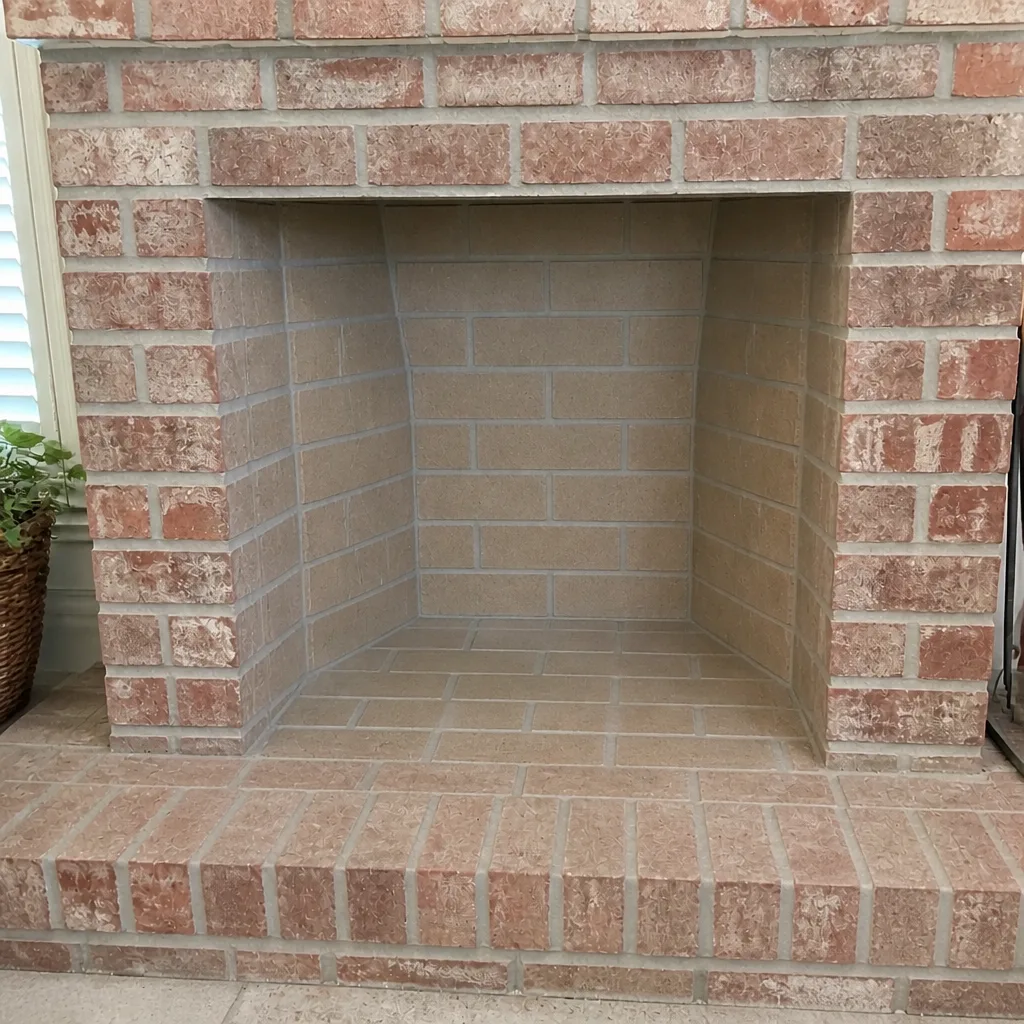
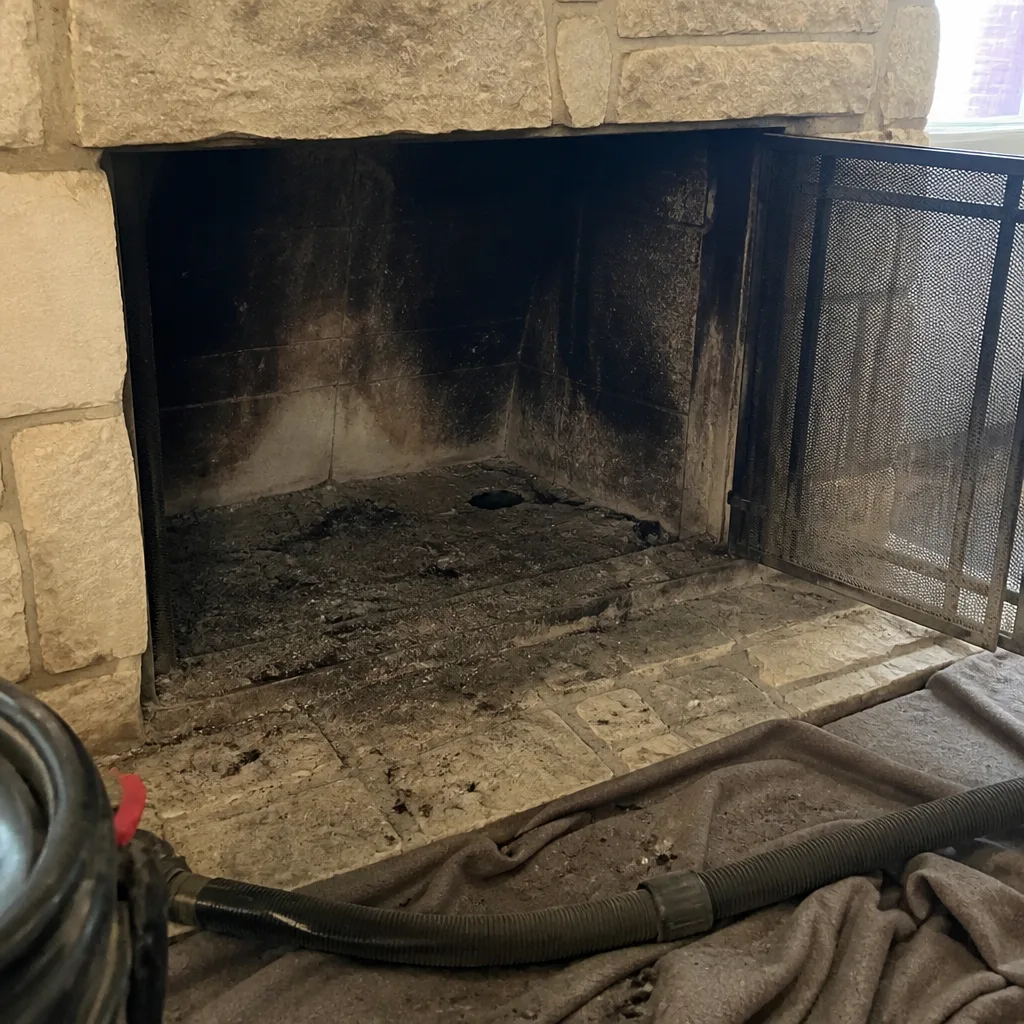
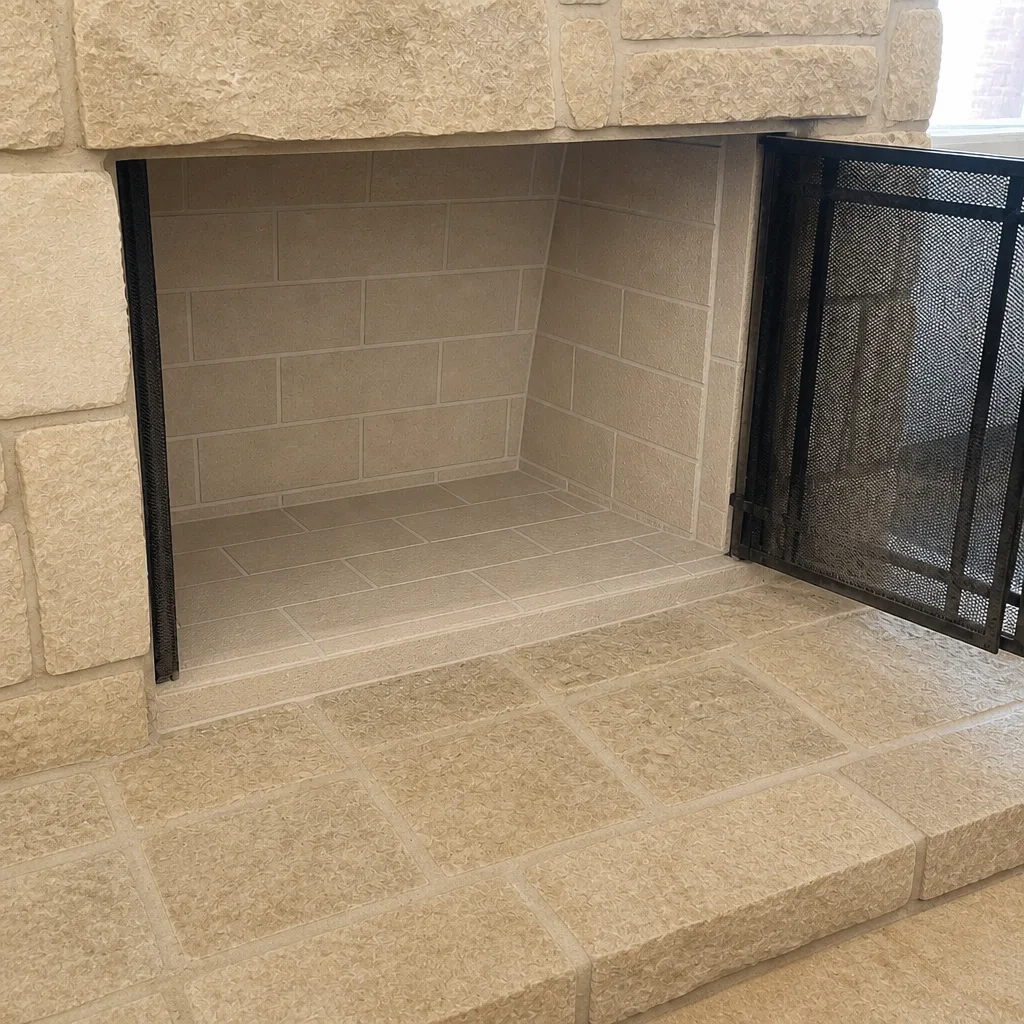
See the difference
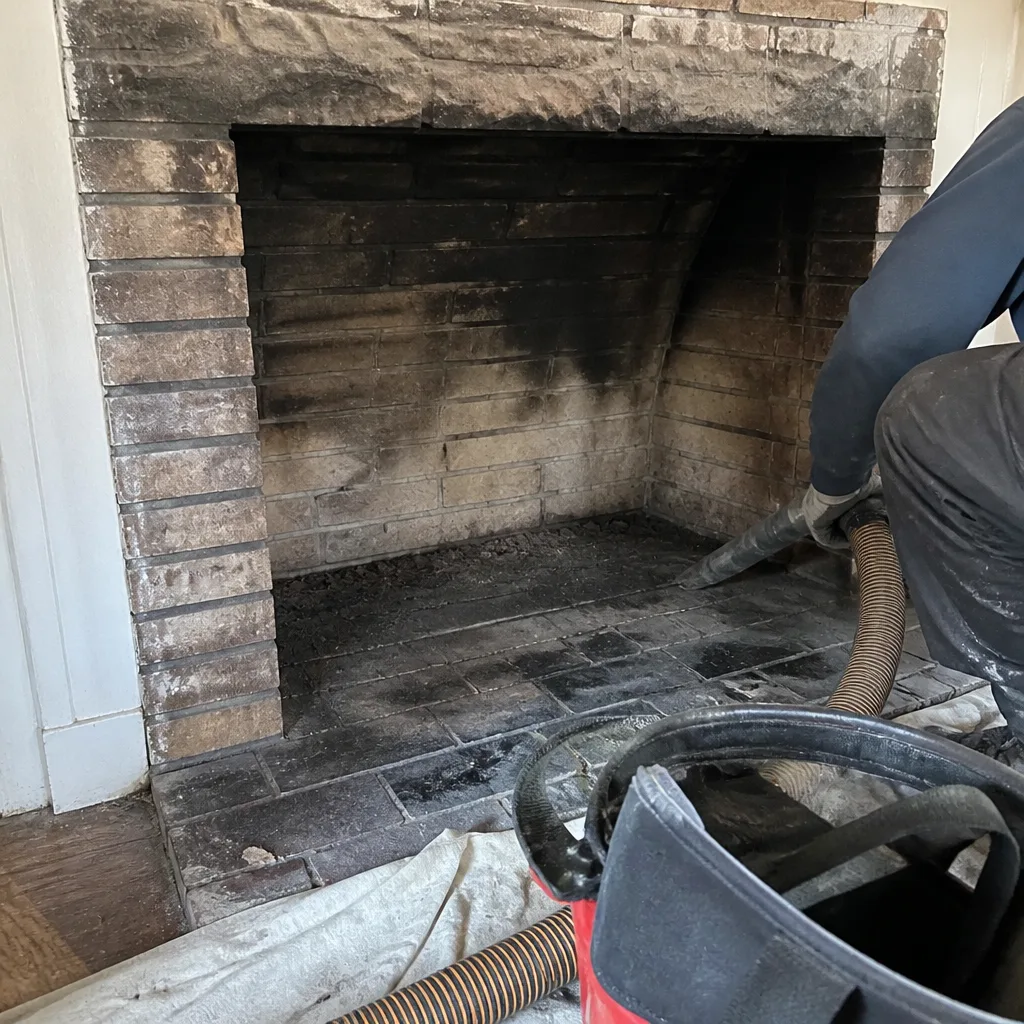 Before
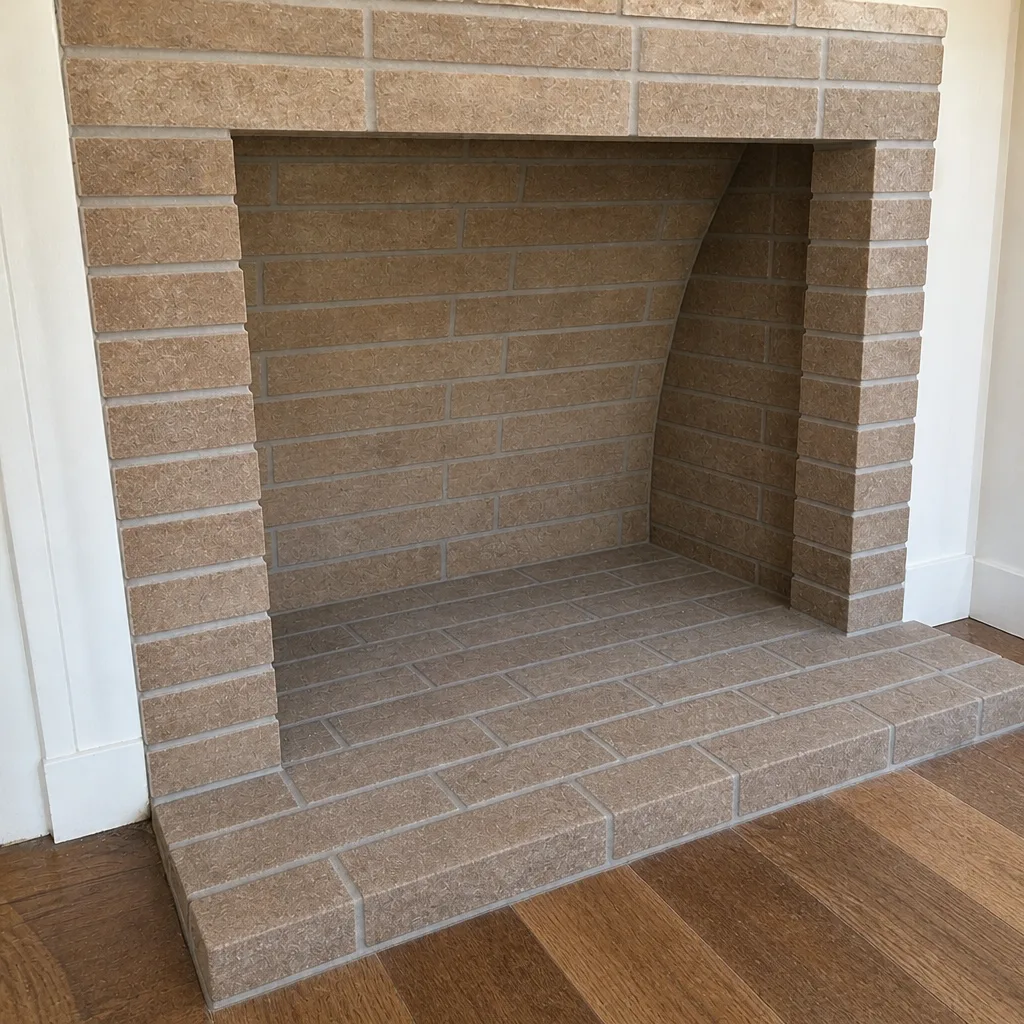 After
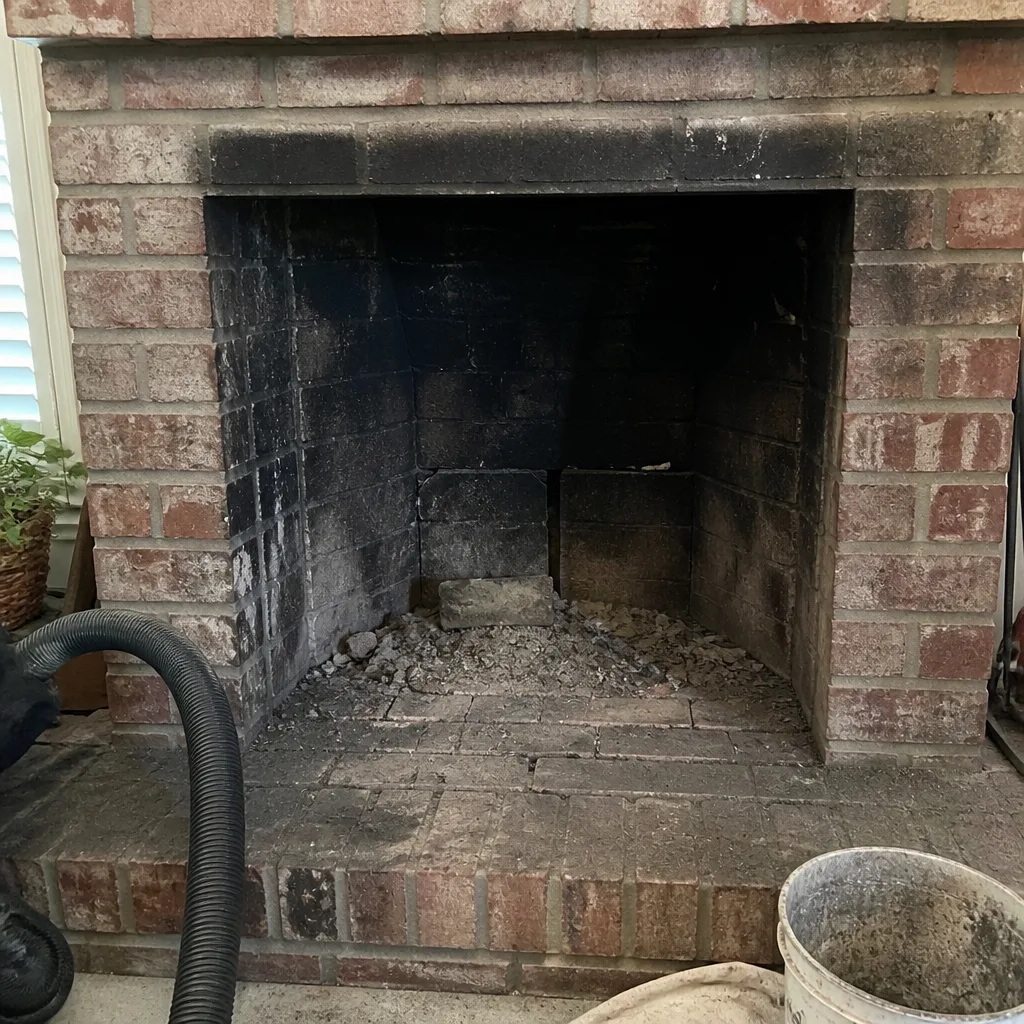 Before
 After
 Before
 After
When to Call a Professional
Call a professional when your flue has an offset, when you see glazed creosote, when there’s any visible cracking or spalling, when the chimney has never been inspected, or when you notice smoke spillage, persistent odor, or a draft problem that cleaning won’t fix. Call us if you’re unsure whether your flue qualifies for DIY at all, because establishing the baseline is the one step that makes every later decision easier. Chimney Sweep Tracy offers free estimates in Tracy – call (833) 766-1560. Our technicians have up to experience, and the written estimate sets the final price on any repair we recommend. We answer 24/7. Fast dispatch from 7am to 7pm, Sunday through Friday.
Frequently Asked Questions
A chimney sweep in Tracy typically runs in the range of $150 – $350, depending on flue accessibility, the amount of creosote, and whether the sweep includes a full inspection. The written estimate you get before the work begins sets the final price, so there are no surprises on the invoice. Call (833) 766-1560 for an exact quote – estimates are free.
You can clean your own chimney safely if it’s a straight, accessible flue with Stage 1 creosote only, no offsets, and a documented professional inspection establishing its condition. The moment your flue has an offset, glazed creosote, or any visible damage, DIY cleaning can’t safely reach the problem areas, and a professional sweep is the right call. If you’re not sure which category your flue falls into, have it inspected before you decide.
Skipping both allows creosote to build to a flammable level and lets defects like cracked flue tiles and liner joint failures go undetected, which is where chimney fires and carbon monoxide events originate. In Tracy’s mild burn season, the creosote volume builds more slowly, which means a defect can sit undetected through several seasons before anyone catches it. The inspection is what catches it; skipping it lengthens the window. Call (833) 766-1560 to schedule a sweep and inspection – estimates are free.
It depends on the flue’s condition and structure, and the answer should come from an inspection, not a sales conversation. HeatShield ceramic resurfacing can extend flue life without full demolition when the flue structure allows it, which makes it a cost-effective alternative to relining in the right conditions. When the flue needs full relining, DuraFlex flexible stainless systems handle offsets and non-standard configurations. The recommendation should follow the camera evidence, and you should be able to see that evidence yourself before agreeing to the work. Call (833) 766-1560 for a free estimate.
Most chimneys should be swept and inspected annually, and the inspection should happen even in seasons when you burn less, because that’s what catches defects before they become dangerous. A homeowner who burns lightly may go a couple of seasons between needed cleanings, but the inspection schedule shouldn’t stretch the same way. In a mild climate like Tracy’s, the annual inspection is what keeps the defect window short. Call (833) 766-1560 to book an inspection – estimates are free.
Most policies don’t exclude claims simply because the homeowner self-cleaned, but carriers investigating a chimney loss look closely at documented maintenance and whether a qualified inspection established the chimney’s condition beforehand. A homeowner with a dated maintenance log and professional inspection records is in a much stronger position than one with no paper trail. If you self-clean, scheduling a documented inspection is the single best way to protect your standing. Call (833) 766-1560 for a free estimate on a sweep-and-inspection visit.
The Bottom Line
The DIY vs professional question isn’t really about skill. It’s about access and visibility. A homeowner with the right brush and rods can clean a straight flue competently, and that’s a legitimate way to maintain a chimney between professional visits. But the smoke chamber transition, the offsets, and the liner joints require a camera and a trained eye, and those are the places where chimney fires start. In Tracy’s mild burn season, less creosote volume means defects sit undetected longer, so the inspection matters more, not less. Keep a maintenance log, sweep your straight flue if you’re comfortable, and put professional eyes on the parts you can’t see. That’s the honest line.
If you’d like a straight assessment of your chimney’s condition before your next fire, call Chimney Sweep Tracy at (833) 766-1560 for a free estimate. We answer 24/7, with fast dispatch from 7am to 7pm, Sunday through Friday. We tell you what we found – and we tell you when work can safely wait.
Written by the team at Chimney Sweep Tracy.