
Last updated November 16, 2026
 Sweep & inspection
 Caps & crowns
 Flue relining
 Masonry repair
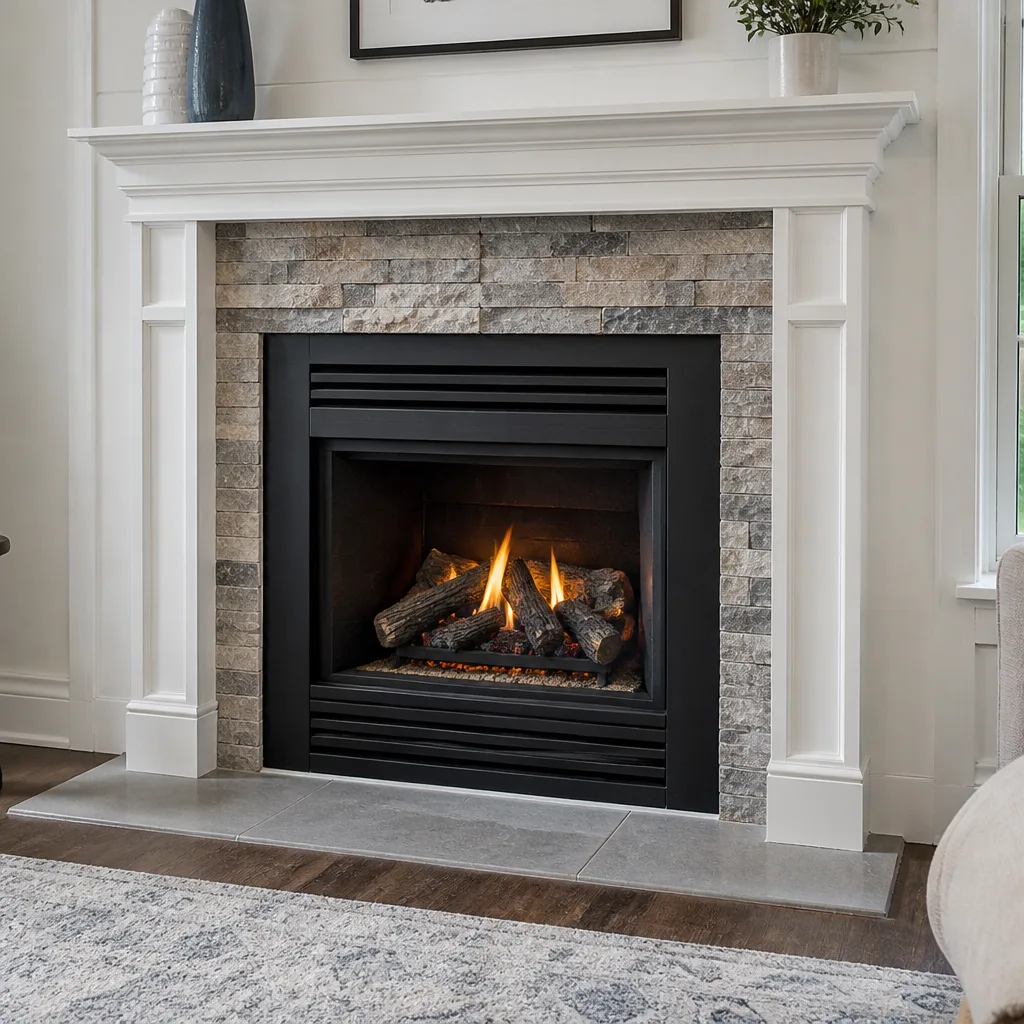 Gas fireplace service
Level 1 sweep and inspection to the NFPA 211 annual standard - flue, crown, cap, and flashing checked and photographed
Chimney sweep logs do not sweep chimneys. They loosen some creosote - which then falls where a brush and vacuum still have to collect it.
Chimney Cleaning Warning Signs: A Tracy Homeowner’s Reference Guide
Smoke backing into the room is the warning sign every homeowner recognizes, and it’s also the least useful one. A smoky firebox can mean a damper left closed, which you fix in ten seconds, or a collapsed flue tile that runs into four figures to correct. The same symptom, wildly different causes. The signs that actually predict expensive failure are quieter, and almost nobody talks about them: a white bloom on the brick, a musty smell in an empty firebox, a hairline crack that runs on a diagonal instead of straight down. This guide maps each warning sign to its probable cause and the response it calls for, so a Tracy homeowner can tell the difference between something to watch and something to book.
Quick Answer
The warning signs that matter most on a Tracy chimney are white staining on exterior brick, crumbling mortar at the crown, a musty smell in the firebox before the first fire of the season, diagonal step cracks in the masonry, and a damper that no longer seals. Each one points to a different problem – water migration, crown failure, summer condensation, soil movement, or a worn damper – and each has its own repair window. Recognizing the sign early is what keeps a small fix from turning into a reline.
Styles & brands we work with
- Sweep & inspection
- Caps & crowns
- Flue relining
- Masonry repair
- Gas fireplace service
Table of Contents
- The Warning Signs That Actually Predict Expensive Failure
- White Staining on Your Chimney Brick: What Efflorescence Tells You
- Crown Spalling: What It Looks Like From the Ground
- Why Your Fireplace Smells Musty in October
- Settling Cracks vs. Step Cracks in Tracy’s Clay Soils
- Damper Warning Signs You Can Check With a Flashlight
- Smoke Backing Into the Room: Mapping the Cause
- Creosote Glaze and the Signs of a Chimney Fire
The Warning Signs That Actually Predict Expensive Failure
Most chimney problems announce themselves long before they cost real money. The trouble is that the early announcements are boring. A little white powder on the brick doesn’t look like anything. A faint smell in an unused fireplace reads as “needs cleaning.” A crack you can barely see from the driveway gets filed away for later. The expensive failures we see in Tracy almost always had a quiet precursor that went unread for a season or two.
Here is the short list of signs worth your attention, ordered roughly by how much they tell you about the health of the chimney:
- White, powdery staining on exterior brick. Signals active water moving through the masonry.
- Crumbling or flaking mortar at the chimney crown. The crown is the concrete cap on top; when it fails, water gets straight into the flue.
- A musty or smoky smell in the firebox before the first fire of fall. Points to condensation and poor ventilation during the off-season.
- Diagonal cracks that step along the mortar joints. Suggests movement in the structure, not just surface settling.
- A damper that won’t close flush or feels gritty when you move it. Means heat loss and draft problems all season.
- Smoke rolling into the room on a cold start. The least specific sign, but one that should always be traced to a cause.
- Glazed, shiny creosote inside the flue. The most flammable form of buildup, and the one most often missed because it lives out of sight.
What ties these together is that each one has a narrow window where the fix is small. Efflorescence caught early is often a flashing and crown repair. Caught late, it’s water-damaged flue tiles that no longer hold, and that’s when relining enters the conversation. Our technicians have up to experience reading these signs, and the consistent lesson is that timing matters more than severity.
White Staining on Your Chimney Brick: What Efflorescence Tells You
That white, chalky bloom on the outside of a Tracy chimney is called efflorescence, and it is not cosmetic. It’s salt pushed to the surface by water that has soaked into the brick and mortar and is now drying out. The stain is the visible end of a process happening inside the masonry. Where the bloom is thickest is usually where the water is entering.
In the Tracy area, efflorescence tends to appear after a specific pattern: a stretch of wet weather followed by warm, dry, breezy days. The masonry soaks up moisture during the wet stretch, then the sun pulls it back out through the surface and leaves the salt behind. That’s why a homeowner often notices the staining after a dry spell rather than during the rain. It looks like the chimney suddenly developed a problem, when the water was quietly working its way in for weeks.
The most common entry points for that water are:
- A crown that has cracked or pulled away from the flue.
- Failed flashing where the chimney meets the roofline.
- Mortar joints that have eroded and left the brick edges exposed.
- Missing or deteriorated spark arrestor and cap assemblies that let rain straight down the flue.
Each of these is repairable, and the repair ranges from modest to significant depending on how long the water has been getting in. The key diagnostic question is whether the flue tiles behind the brick are still sound. If the water has been migrating for multiple seasons, the tiles can crack and spall, and at that point a liner becomes the sensible fix. This is where a proper inspection earns its keep: a sweep cleans the flue, but the inspection is what tells you whether the water damage has reached the flue structure. If you’re seeing heavy efflorescence, it’s worth a look at our chimney repair service to understand what a crown or flashing repair involves.
Crown Spalling: What It Looks Like From the Ground
The chimney crown is the concrete or mortar cap that sits on top of the chimney and sheds water away from the flue. When it starts to fail, it does so in a pattern called spalling: small flakes and chunks of the crown surface break off and fall away, leaving a rough, pitted top. From the ground, you’ll see it as a ragged edge along the top of the chimney rather than a clean, straight cap. You may also find chips of concrete on the roof or in the gutter below.
Spalling is a warning sign with a defined repair window. While the crown is intact, it’s doing its one job well. Once it cracks or spalls, water runs into the gap between the crown and the flue, freezes into the masonry during cold snaps, and widens the gap further. Left long enough, the water reaches the flue tiles and the top of the smoke chamber. At that point, a crown repair has grown into a flue repair.
From ground level, the things to look for are:
- A crown that looks chipped, rough, or uneven along its outer edge.
- Visible cracks running from the flue out toward the edge of the crown.
- A gap where the crown meets the flue liner (the crown should seal against it).
- Concrete debris on the roof surface or in the downspout area below the chimney.
If you can see any of these, the crown is the place to start. Crown repair is generally one of the more cost-effective fixes on a chimney, and it protects everything downstream. Doing it early is what keeps the repair from escalating. When we quote crown work in Tracy, we use Famco flashing systems and Copperfield components because those are the parts other chimney professionals specify by name, and the compatibility matters more than the price difference.
Why Your Fireplace Smells Musty in October
A musty or smoky smell coming from a fireplace that hasn’t been used since spring is a specific diagnostic signal, and it’s not about cleanliness. It’s about condensation. During the warmer months, the air inside the flue is cooler than the air outside, and moisture from the surrounding masonry and the outdoor air condenses on the flue walls. That trapped moisture mixes with any leftover soot and creosote residue from last season, and the result is the smell you notice when the weather turns.
In the Tracy area, the pattern is reliable: a long, warm, dry summer followed by the first cool evenings of fall. The chimney has been sitting idle, unventilated, holding whatever moisture the masonry absorbed. The smell is the chimney telling you the flue has been damp for months. That matters because damp flue tiles deteriorate faster than dry ones, and because a smell that strong usually means there’s more residue in the flue than a clean burn would leave.
What the smell does not necessarily mean is that you need major work. Sometimes it’s a straightforward case of a sweep and an inspection resetting the chimney for the season. Sometimes it points to a flue that’s been holding moisture because the crown or flashing has been letting water in. The way to know which is to have someone look. If you’ve noticed the smell in October before the first fire, that’s the moment to book an inspection, not after you’ve run a few fires and the smell has cooked into the house. A seasonal chimney sweep before the first burn is the practical response.
Settling Cracks vs. Step Cracks in Tracy’s Clay Soils
Not every crack in a chimney needs attention. Some are normal and stay put. Others are telling you something about the ground the chimney sits on. The distinction comes down to direction and shape.
Normal settling cracks are usually hairline, vertical, and stable. They appear in the mortar joints or the brick face, run more or less straight, and don’t change from season to season. Many Tracy chimneys have a few of these, and they’re typically cosmetic.
Step cracks are the ones to watch. They run diagonally, stepping from one mortar joint to the next like a staircase, often near a corner or where the chimney meets the house. A step crack suggests that part of the structure has moved relative to the rest. In areas with expansive clay soils, the ground swells and shrinks with the moisture cycle, and that movement can work its way up into the masonry. Tracy sits on soils that do exactly this, so step cracks are a sign worth taking seriously.
How to tell them apart from the ground:
- Look at the crack’s direction. Vertical and hairline is usually settling; diagonal and stepping is usually movement.
- Check if the crack is wider at one end than the other. A taper can indicate movement over time.
- Look for matching cracks on the inside face of the chimney if visible, or on the firebox surround.
- Compare the crack width now to what you remember from a season ago. Widening is the signal to call.
A step crack doesn’t automatically mean the chimney is unsafe, but it does mean someone qualified should look at it and tell you whether the movement has affected the flue. If a step crack has opened enough to let water in or has displaced the flue tiles, the fix is real work. If it’s small and stable, it’s something to monitor. The honest answer depends on what the inspection finds. To understand the full repair picture in town, our Tracy page covers how these calls typically go.
Damper Warning Signs You Can Check With a Flashlight
The damper is the metal plate above the firebox that seals the flue when the fireplace isn’t in use. It’s one of the few chimney components a homeowner can assess without getting on the roof or into the flue, and it’s worth checking every fall. A damper that doesn’t seal properly costs you heat all winter and can cause draft problems year-round.
Here’s how to check it safely from inside the firebox:
- Wait until the fireplace has been cold for at least a day.
- Shine a flashlight up into the firebox and locate the damper plate.
- Open and close it by hand. It should move smoothly and seal flush against its frame when closed.
- Look for rust, soot buildup on the hinge, or a plate that hangs at an angle when closed.
- Check for a visible gap between the plate and the frame when it’s shut. Daylight coming down the flue is a clear sign of a poor seal.
- Feel for grit or resistance in the hinge. A damper that grinds is usually on its way to failing.
What the signs mean: a damper that won’t seal flush means heat from the house escapes up the flue all winter and cold air comes down. A rusty or gritty damper usually points to moisture in the firebox, which is another reason to check the crown and flashing. A damper that hangs at an angle is a hardware problem, and those are typically straightforward to fix. If your damper is stuck or the seal is gone, that’s the kind of thing to mention when you book, so it gets looked at along with the sweep.
Smoke Backing Into the Room: Mapping the Cause
Smoke backing into the room is the sign that gets the phone call, but it’s the one that tells you the least on its own. The same symptom can come from at least six different causes, and the fix for each is completely different. The useful move is to narrow down which cause you’re dealing with before assuming the worst.
The most common causes, roughly in order from simplest to most involved:
- A closed or partly closed damper. The fix takes seconds. Check this first.
- A cold flue that hasn’t established draft yet. Common on the first fire of the season; a pre-warm with a rolled newspaper usually resolves it.
- Negative pressure in the house. A kitchen exhaust fan, a bath fan, or a tightly sealed home can pull air down the flue. Crack a window near the fireplace and see if the smoke clears.
- A flue that’s too small for the firebox opening. This is a design problem and needs a proper assessment.
- Blockage in the flue from creosote, a bird nest, or debris. Needs a sweep and inspection.
- A damaged or collapsed flue tile. This is the four-figure case, and it’s why smoke backup is worth investigating rather than ignoring.
Run through the first three on your own. If you can’t get the smoke to stop, the next step is a professional look, because causes four through six require someone on the roof and a camera in the flue. In our experience, the smoky-firebox calls that turn into serious repairs are almost always cases where the smoke was tolerated for a few seasons. The firebox is trying to tell you something. When we open up a flue with DuraFlex flexible liner systems for relining, it’s usually because a smoke problem that started small went unaddressed long enough to damage the tiles. A complete sweep, inspection, and repair under one contractor means the tracing and the fix happen together rather than in two separate visits.
Creosote Glaze and the Signs of a Chimney Fire
Creosote is the residue left behind by burning wood, and it comes in three forms. The first is soft and flaky and cleans up easily. The third is glazed, shiny, and hard, and it’s the form that fuels chimney fires. Most homeowners never see it because it lives inside the flue, which is why a professional inspection with a camera matters more than any checklist of external signs.
The external signs of a chimney fire that has already happened are subtle and easy to miss:
- A puff of smoke or a loud pop from the chimney, sometimes reported as sounding like a low roar.
- Creosote flakes or debris on the roof or in the yard below the chimney.
- Warped or discolored damper hardware.
- Cracked or displaced flue tiles visible only in an inspection.
- A sudden change in the way the fireplace draws or smells afterward.
A chimney fire can happen and be over in a few minutes, leaving damage that isn’t visible from the living room. That’s why an annual inspection matters even when the fire is drawing well. The inspection is what catches the cracked tile from a small fire before the next fire turns it into a structural problem. This is also why we work with Chimney Sweep Tracy as a single point of contact for sweep, inspection, and repair: the person who inspects your flue is the person who knows what it looked like last season, and the repair plan stays in one set of hands.
Common Mistakes to Avoid
- Assuming white staining is just weathering. Efflorescence looks like harmless bloom, but it’s the visible end of water moving through mortar and brick. Waiting a season usually turns a crown repair into a flue repair, especially with the wet-then-dry swings we get in the Tracy area.
- Treating a musty smell with air freshener. The smell is coming from a flue that’s been holding moisture all summer. Covering it up hides the sign that matters; the smell is the only symptom the chimney will show you before the first fire of the season.
- Mistaking step cracks for settling cracks. Any diagonal crack that steps from joint to joint deserves a look, particularly on expansive clay soils. Normal settling cracks run vertical and stay put; step cracks are usually telling you something moved.
- Skipping the damper check because it “seems fine.” A damper that doesn’t seal flush is a heat leak all winter and often a sign of moisture in the firebox. It’s a two-minute flashlight check that pays for itself in the first cold month.
- Calling smoke backup a “cold flue” problem without checking further. The first three causes are worth ruling out on your own. If the smoke keeps coming after you’ve checked the damper, the pressure, and the pre-warm, it’s telling you about a flue or draft problem that needs a camera in the flue.
- Waiting for the first fire of the season to notice the flue has been blocked. A bird nest, a sagging tile, or a broken cap can all be sitting in the flue right now. Getting the sweep out of the way before burning season is cheaper and calmer than discovering the blockage with smoke on the ceiling.
- Skipping the annual inspection because the chimney “drew fine last year.” Chimney damage accumulates quietly. The cracks, the crown spalling, and the creosote glaze don’t announce themselves from the living room; the inspection is what catches them while they’re still small.
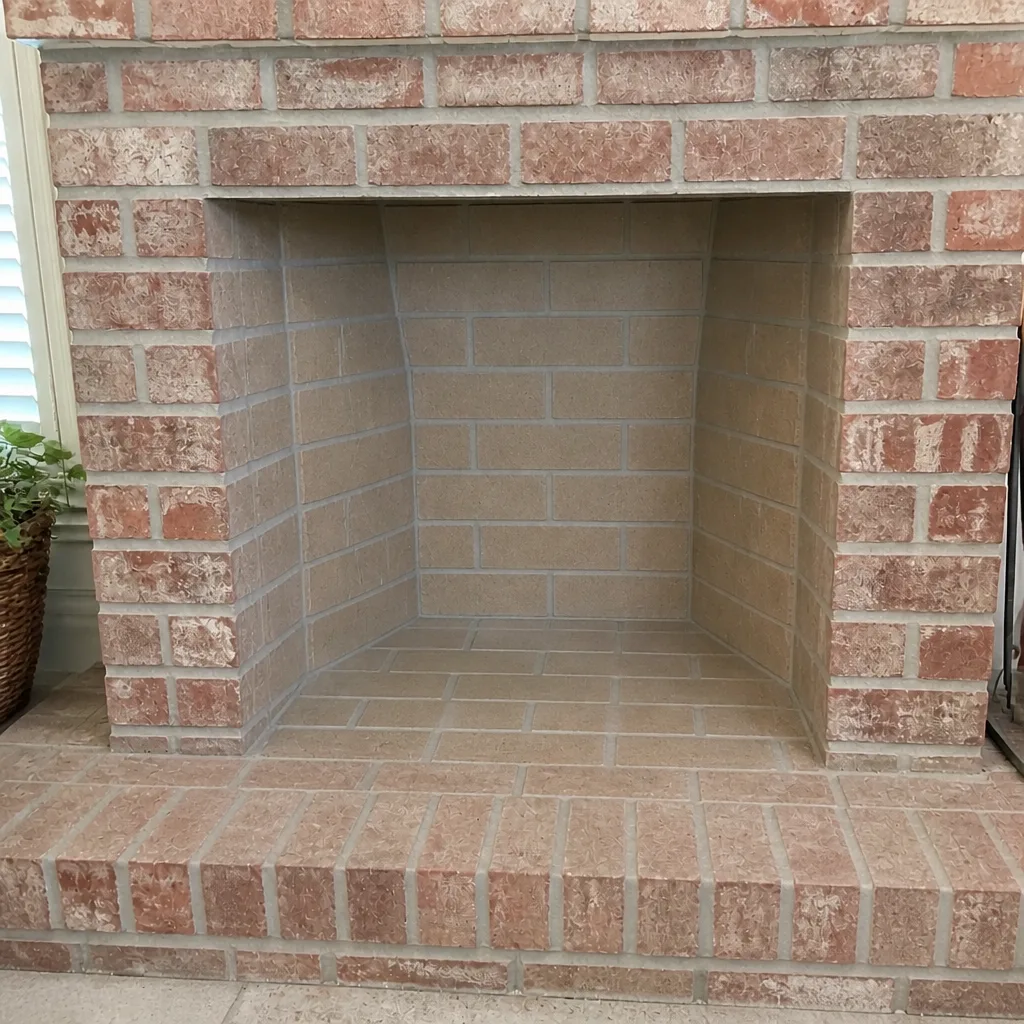
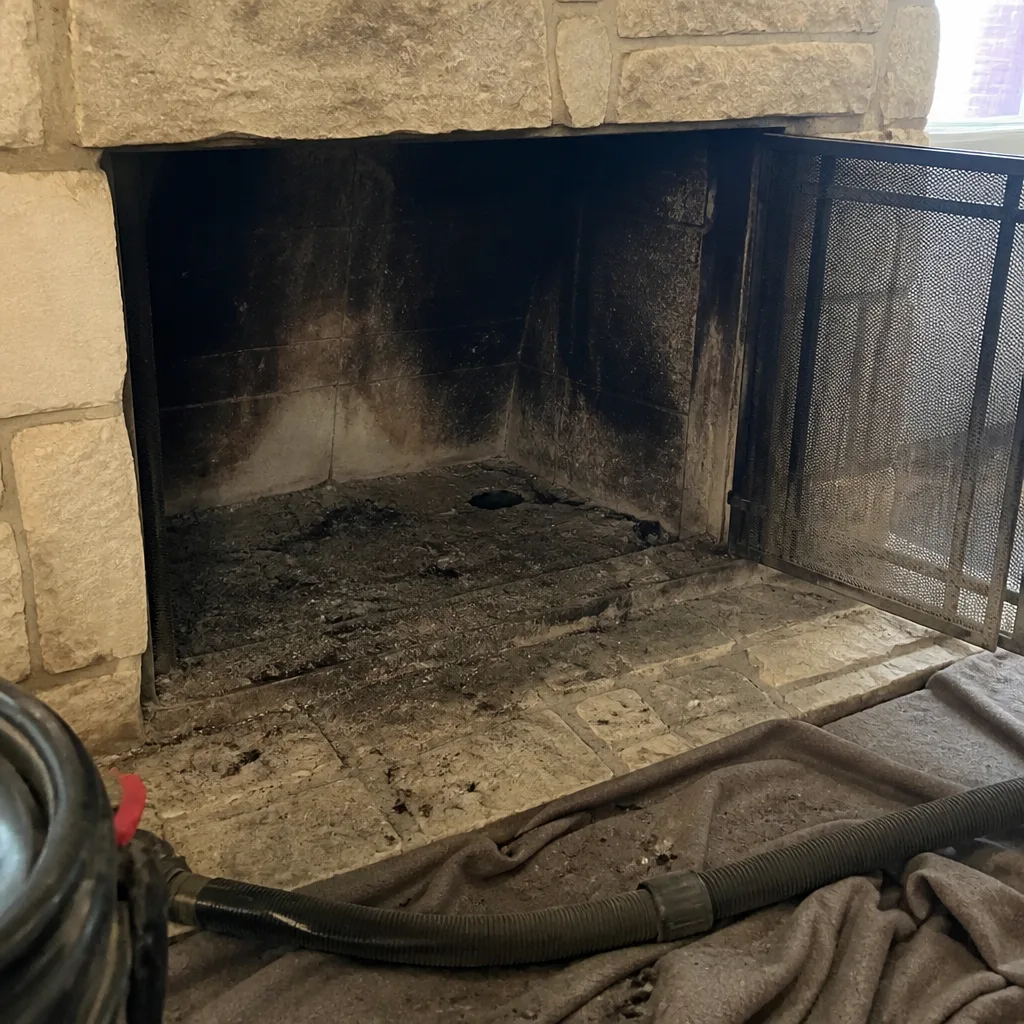
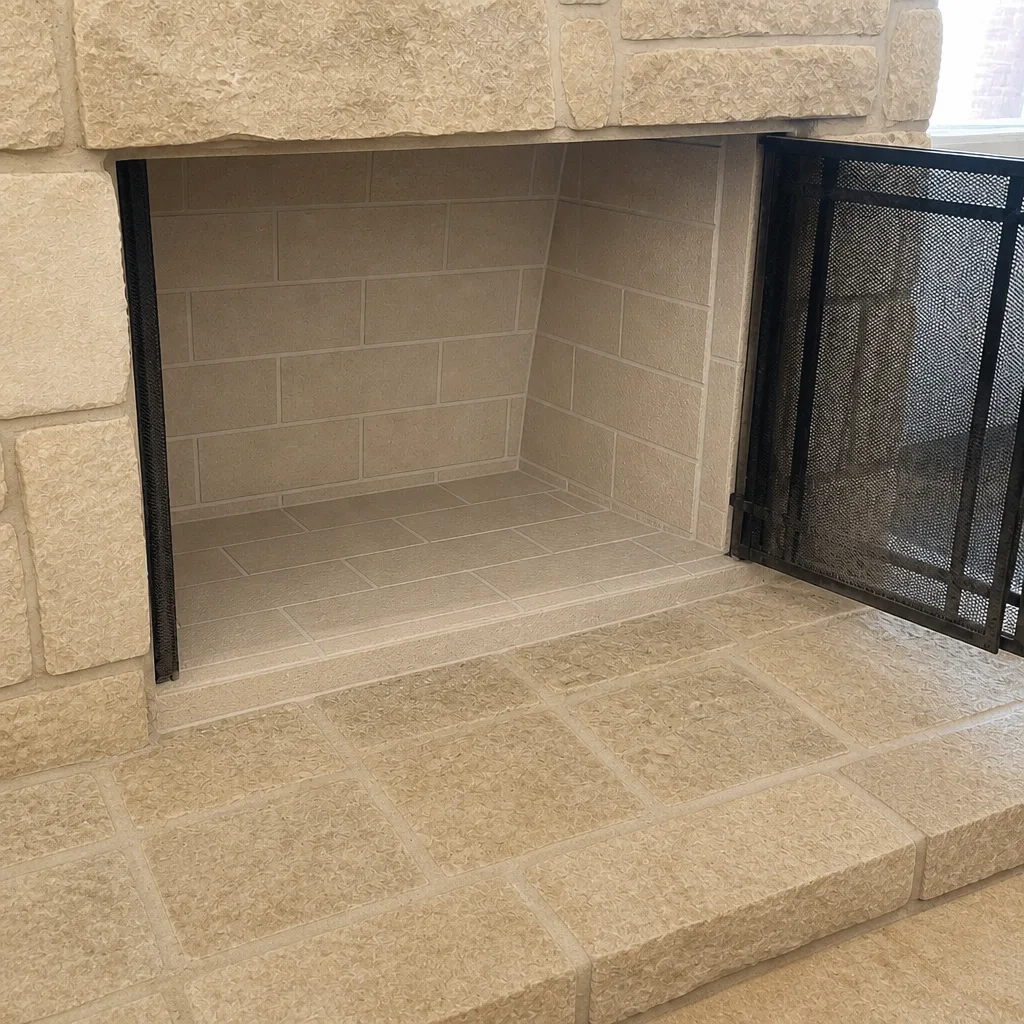
See the difference
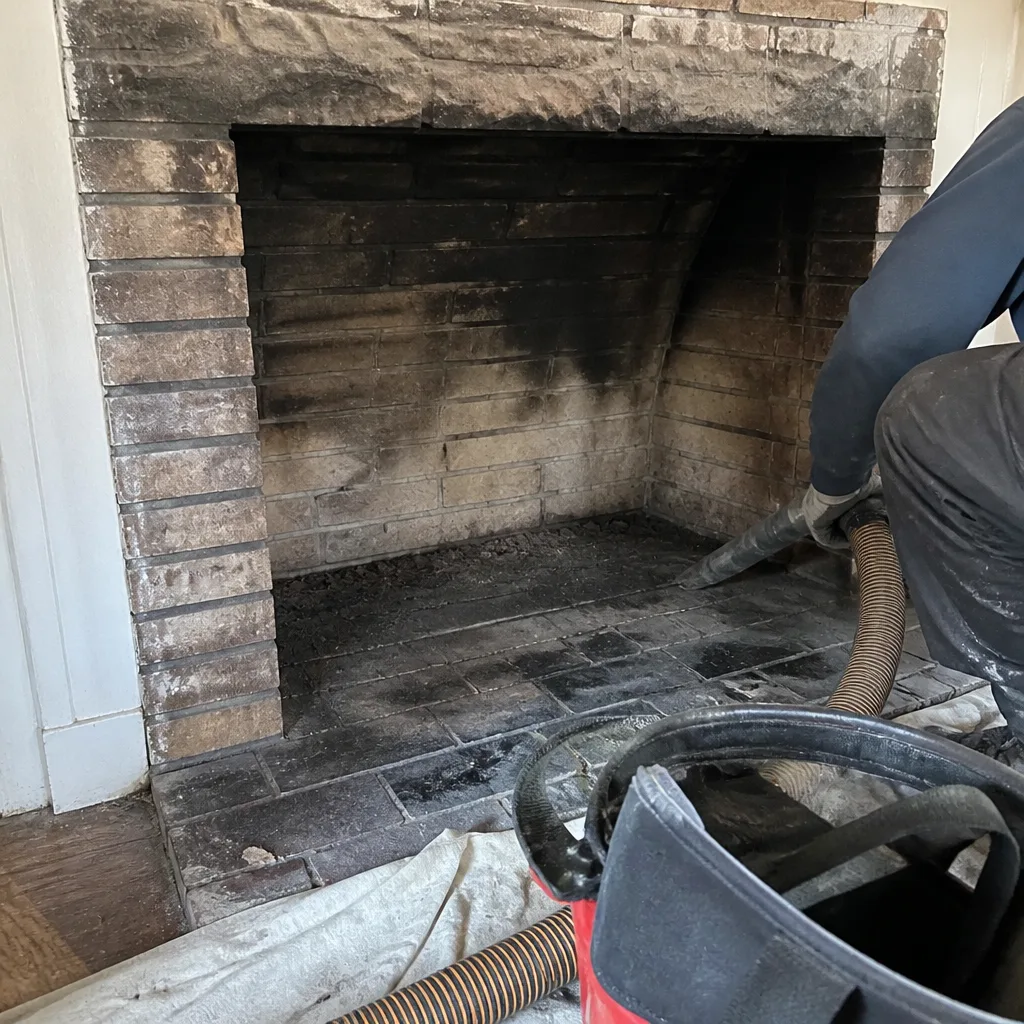 Before
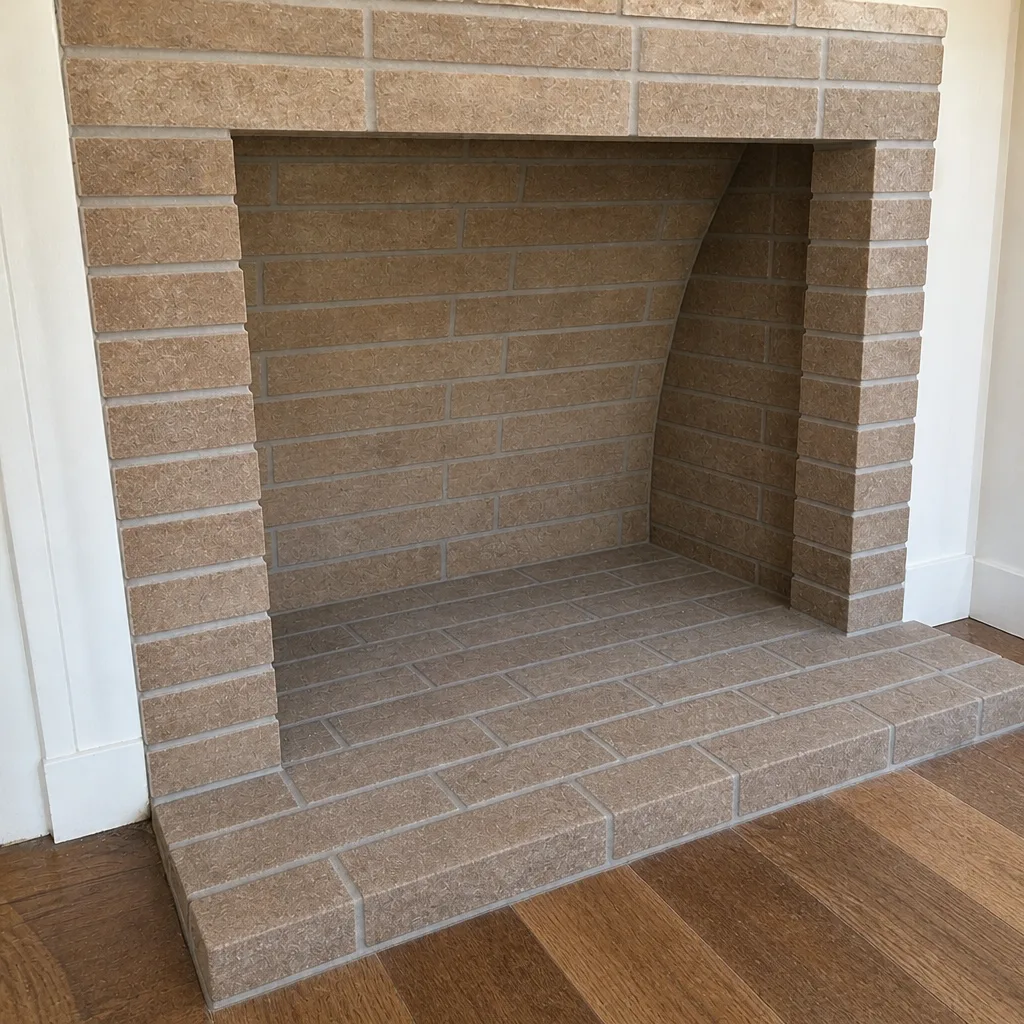 After
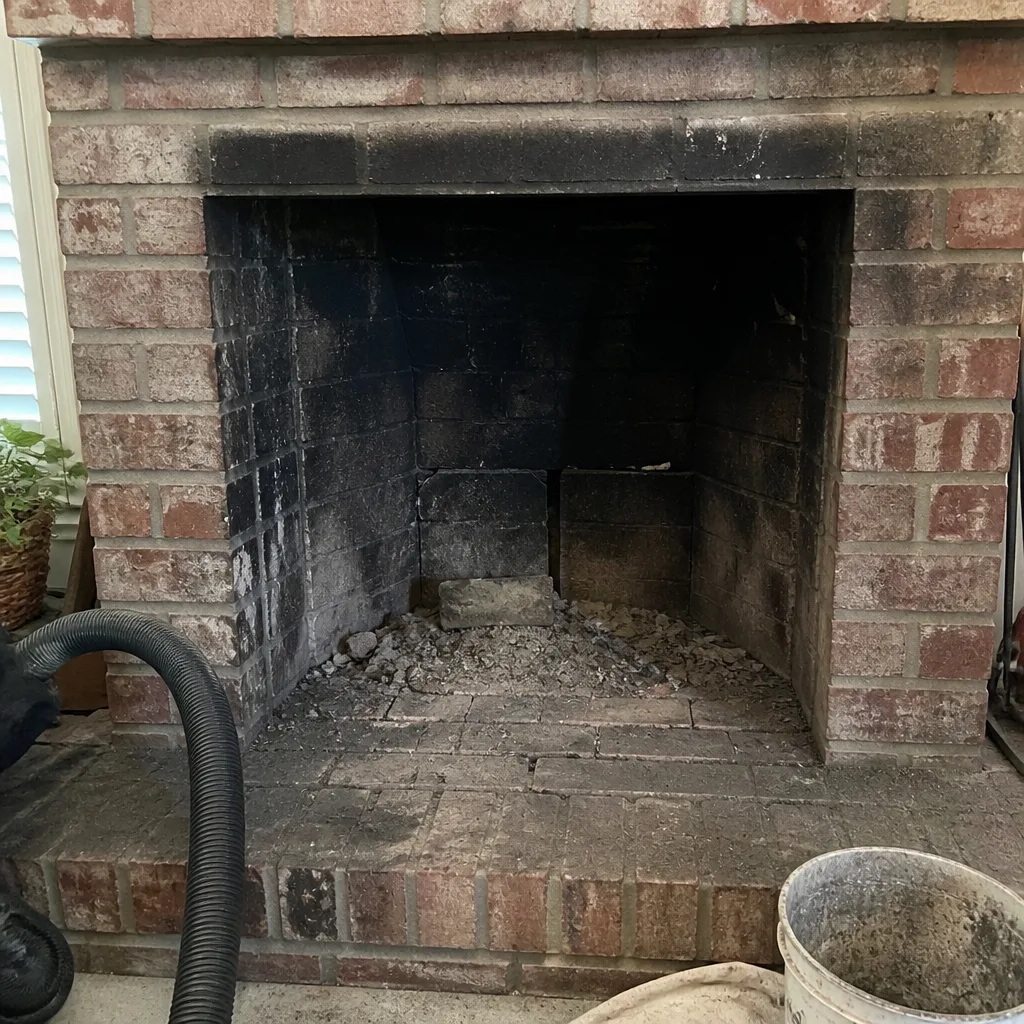 Before
 After
 Before
 After
When to Call a Professional
If you’ve noticed any of the heavy signs – white staining that’s spread across the brick, a crown that looks rough or chipped, a diagonal step crack, a musty smell that started in the fall, or smoke that won’t clear after you’ve checked the damper – that’s the point to have someone look. The same goes for you if your damper won’t seal, if you’ve seen creosote flakes on the roof, or if the chimney hasn’t been inspected in a few seasons. Chimney repair is far less expensive when it starts from an inspection report than when it starts from a failure.
Chimney Sweep Tracy offers free estimates in Tracy. Call (833) 766-1560. We answer 24/7. Fast dispatch from 7am to 7pm, Sunday through Friday. The written estimate is what sets the final price, and the inspection is what tells you what actually needs doing. If the honest answer is that the chimney is fine and doesn’t need work yet, you’ll hear that.
Frequently Asked Questions
A chimney usually needs cleaning when you see glazed, shiny creosote in the flue, smell a strong musty or smoky odor before the first fire of the season, notice smoke rolling into the room, or have gone a full burning season or more without a sweep. White staining on the exterior brick and debris on the roof can also point to a cleaning being overdue. Call (833) 766-1560 for an exact quote – estimates are free.
A wood-burning chimney is typically swept once a year, and the number of fires and the type of wood burned can shorten or lengthen that interval. Gas inserts and solid-fuel appliances have their own inspection schedules that depend on the appliance. A pre-season sweep in the fall is the practical rhythm for most homes here. Call (833) 766-1560 to book a sweep and inspection before burning season.
White staining is efflorescence: salt pushed to the brick surface by water moving through the masonry. It usually appears after wet weather followed by warm, dry days, and it points to a water entry problem somewhere at the crown, flashing, or joints. It is not cosmetic. Call (833) 766-1560 for an inspection that traces the water source.
The musty smell comes from condensation that built up in the flue over the warm months, mixing with leftover soot and creosote residue. It’s a signal that the chimney has been damp and unventilated, not that it needs air freshener. In most cases a sweep and inspection will tell you whether the moisture is just seasonal or coming from a crown or flashing failure. Call (833) 766-1560 to get it looked at before the first burn.
Broadly, yes: settling cracks are usually vertical, hairline, and stable, while step cracks run diagonally and follow the mortar joints like a staircase. A step crack is the one to have inspected, because it can indicate structural movement, and Tracy’s clay soils are known to move with the moisture cycle. Call (833) 766-1560 if a crack is diagonal or has widened over a season.
Skipping the inspection lets small problems grow into expensive ones: a crown crack becomes a flue tile failure, glazed creosote becomes a chimney fire, and a small step crack becomes structural movement. None of these show up as obvious symptoms in the living room until they’re well along. An inspection is what catches them while they’re cheap. Call (833) 766-1560 – estimates are free.
The Bottom Line
The chimney warning signs that predict expensive failure are the quiet ones: the white bloom on the brick, the pitted crown, the musty smell in October, the diagonal crack, the damper that won’t seal. Recognizing them early is what separates a modest repair from a reline. The same symptom can have six different causes, and the right fix depends on which one you’re looking at, not on how alarming it feels. Our technicians have up to experience reading these signs, and we work with the brands chimney professionals specify by name – HeatShield ceramic resurfacing when the flue structure allows, DuraFlex liner systems for full relining, and Copperfield and Olympia Chimney components on restoration work. One call covers the sweep, the inspection, and the repair.
Book a sweep and inspection before burning season. Call (833) 766-1560. We answer 24/7. Fast dispatch from 7am to 7pm, Sunday through Friday. You’ll get a written estimate that sets the final price, and a straight answer about what we found.
Written by the team at Chimney Sweep Tracy.