
Last updated November 16, 2026
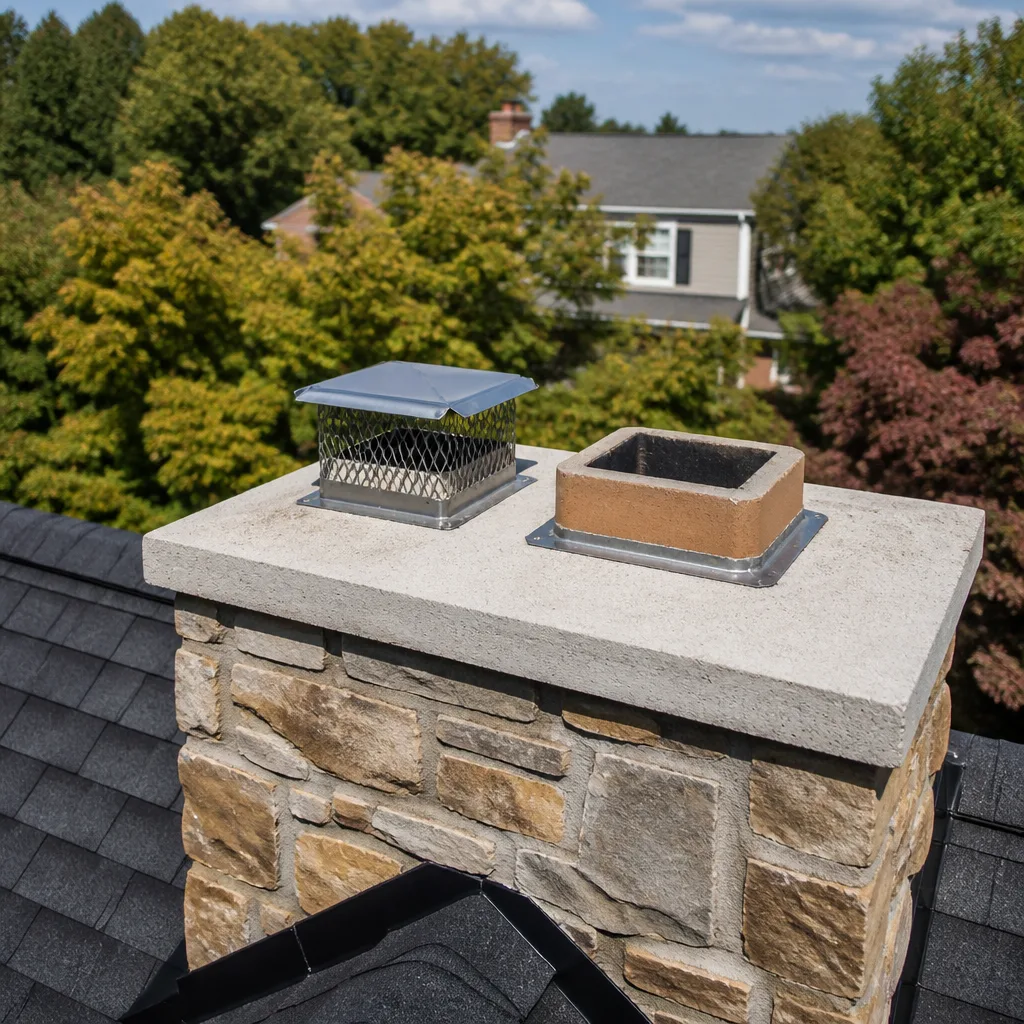 Sweep & inspection
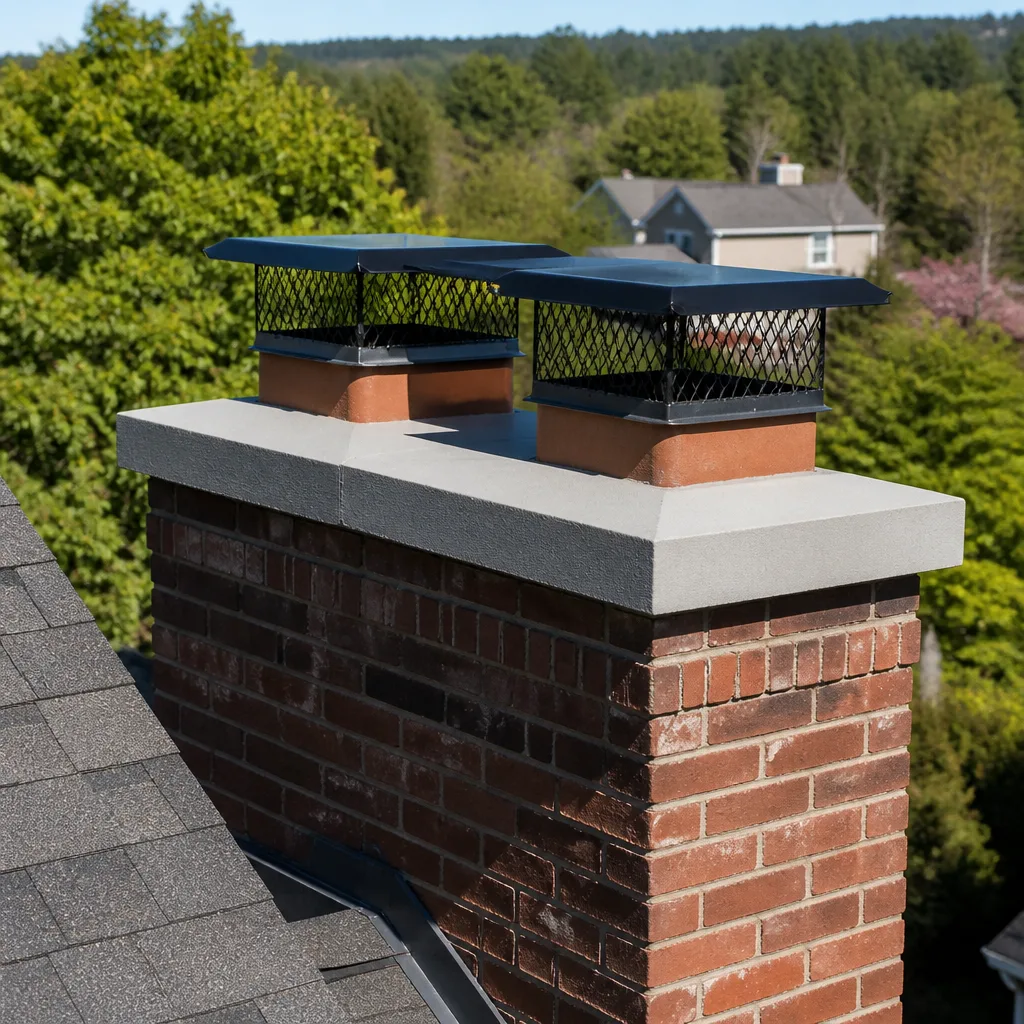 Caps & crowns
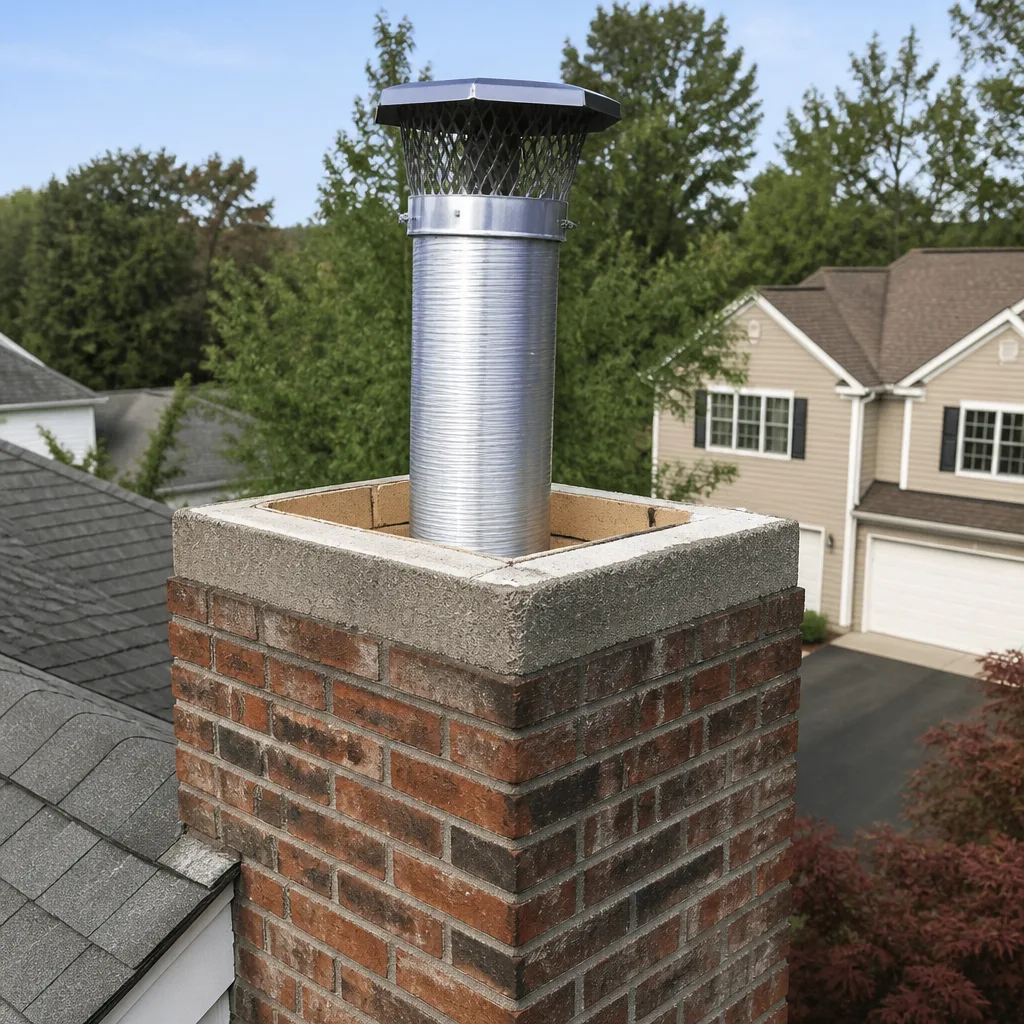 Flue relining
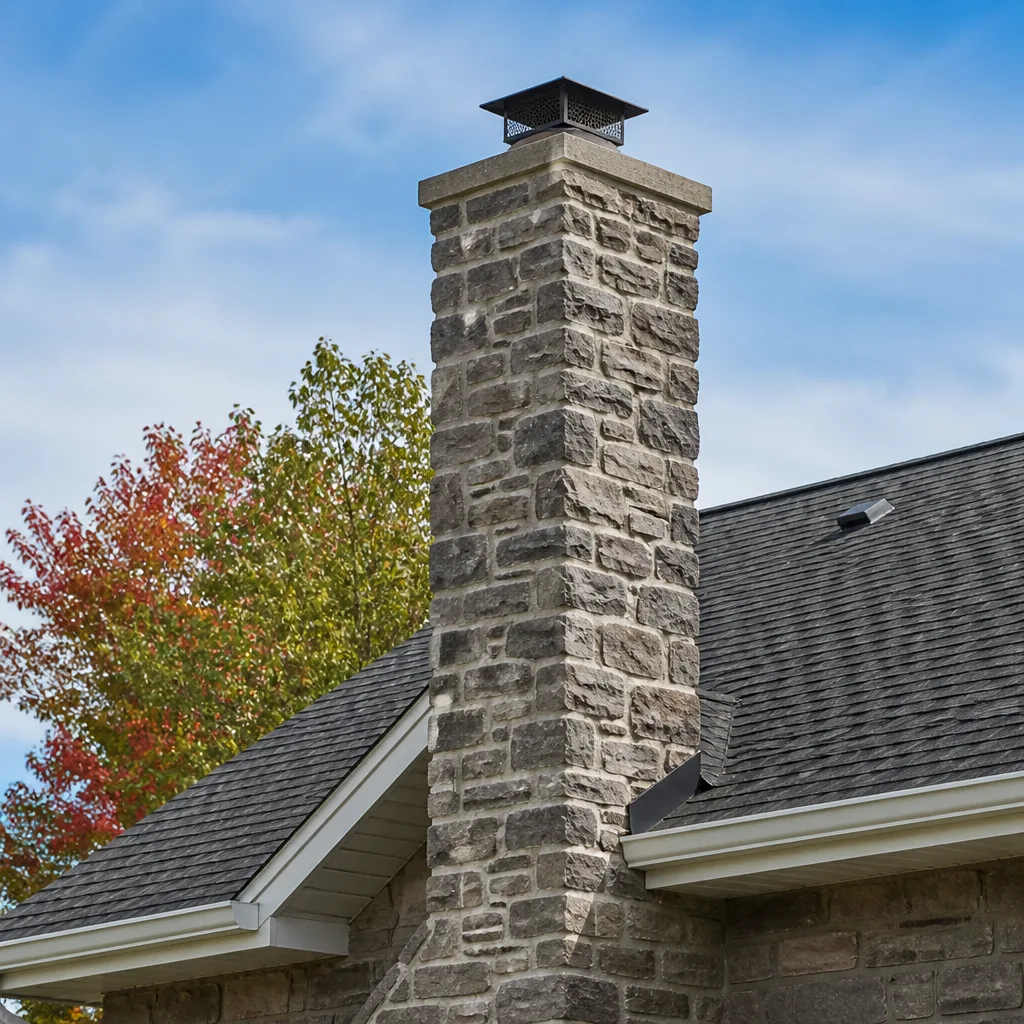 Masonry repair
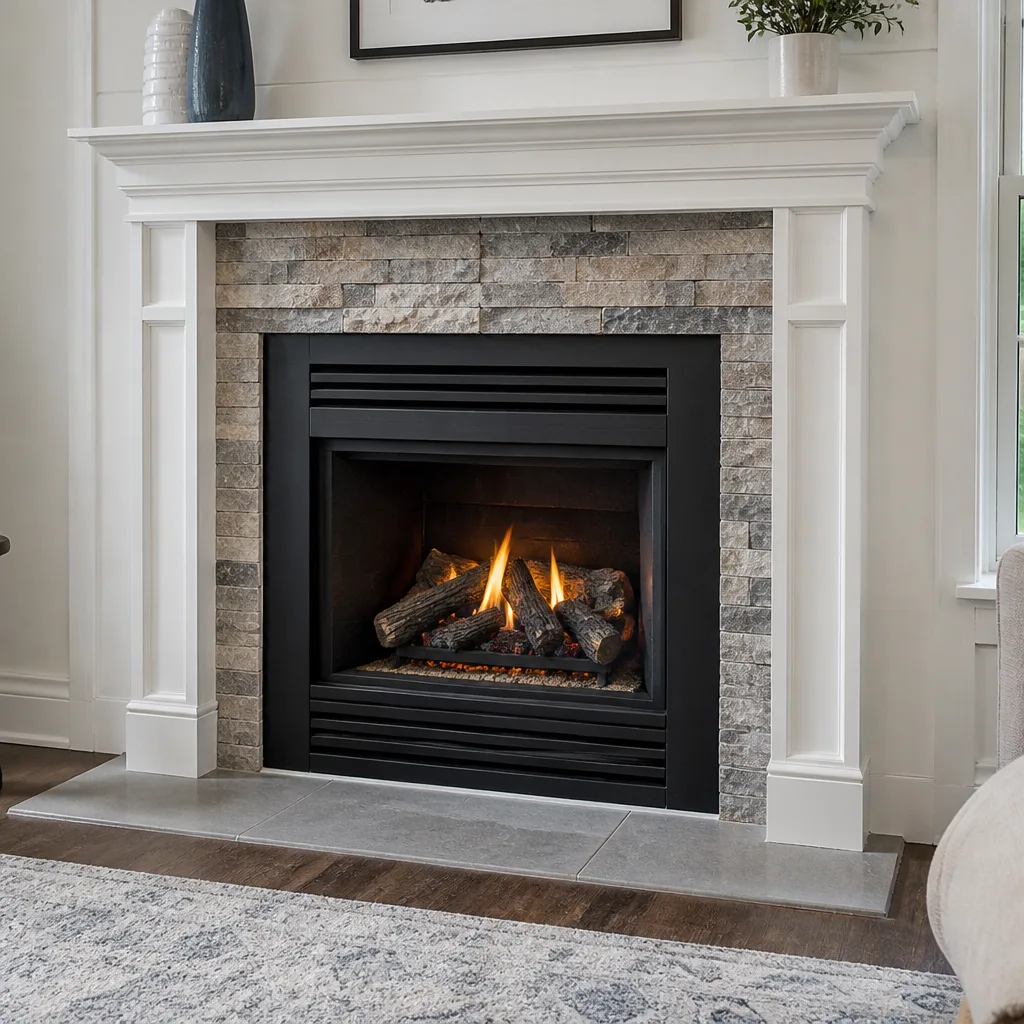 Gas fireplace service
Level 1 sweep and inspection to the NFPA 211 annual standard - flue, crown, cap, and flashing checked and photographed
Chimney sweep logs do not sweep chimneys. They loosen some creosote - which then falls where a brush and vacuum still have to collect it.
The Complete Guide to Chimney Cleaning in Tracy
Most chimney guides are written for the Northeast, where a fireplace runs six months a year and creosote is the only enemy worth naming. Tracy doesn’t work that way. Homeowners here burn maybe 60 nights a season, and the bigger problem is often what settles into the flue during the seven months the fireplace sits cold. Valley dust drifts in from the fields west of town through the dry months, valley oak litter collects on caps and in fireboxes, and then the first cold snap arrives and all of that gets pulled into the flue along with the smoke. That pattern changes what a sweep should focus on and what a report should tell you. This guide walks through the whole cleaning process the way it actually plays out in Tracy.
Quick Answer
Chimney cleaning in Tracy means removing soot, creosote, and warm-season debris from the flue, firebox, smoke chamber, and cap, then inspecting the whole system and telling you in plain language what condition it’s in. Because Tracy’s burn season is short and its dust season is long, the cleaning usually matters as much for what it clears out before the first fire as for what accumulates during the burn. A proper sweep ends with a written report, not just a brushed flue.
Styles & brands we work with
- Sweep & inspection
- Caps & crowns
- Flue relining
- Masonry repair
- Gas fireplace service
Table of Contents
- Why Chimney Cleaning in Tracy Isn’t a Copy-Paste of National Advice
- The Dust Season: How Tracy’s Flues Get Pre-Loaded Before Winter
- Creosote Stages 1, 2, and 3: What Tracy’s Short Burn Seasons Produce
- Level 1 vs Level 2 Inspections: Which One Tracy Homeowners Need
- Offsets, Deteriorated Flues, and the Repair Decision
- Clay-Heavy Soil and What It Does to Tracy Masonry Chimneys
- What a Professional Sweep Actually Involves, Step by Step
- How to Read a Sweep Report Without Calling Back
Why Chimney Cleaning in Tracy Isn’t a Copy-Paste of National Advice
The standard advice you’ll find online assumes a climate where the fireplace runs constantly from October to April. Creosote accumulates fast, and the annual sweep is mostly about staying ahead of it. Tracy’s burn pattern is different. Fires happen in bursts, often on the handful of genuinely cold nights a Central Valley winter delivers, and then the fireplace goes quiet for weeks. That on-again, off-again rhythm produces its own set of conditions.
Two things stand out in our experience working on Tracy chimneys:
- Cold-start burning. A flue that hasn’t been used in weeks is cold, and cold flues draft poorly until they warm up. Those first twenty minutes of a fire are when incomplete combustion happens and when the stickiest deposits form.
- Long dormant periods. Between burns, the flue collects whatever the air carries. In a valley town surrounded by agricultural land and open ground, that’s a lot of fine dust.
So the sweep in Tracy isn’t only about removing what the fire left behind. It’s also about removing what the months between fires deposited. That distinction matters when you’re deciding how often to book and what a technician should be looking at. If you want the short version of what a standard cleaning covers, the chimney sweep page lays out the scope; this guide goes deeper into the why.
The Dust Season: How Tracy’s Flues Get Pre-Loaded Before Winter
From roughly May through October, Tracy’s air carries a steady load of fine particulate. Fields dry out, the wind picks up in the afternoons, and anywhere dust can settle, it does. A chimney is an excellent dust trap. Air moves through the flue constantly, even when there’s no fire, driven by temperature differences between the house and the outside air. Whatever is in that air gets filtered through the chimney’s openings and settles on the flue walls, the smoke shelf, and the damper.
What does that look like by the time fall arrives?
- A film of fine grit on the smoke shelf and damper blade.
- Debris against the cap screen, sometimes enough to restrict flow.
- Dust mixed with last season’s soot, creating a layer that’s harder to brush off than soot alone.
- Oak leaves, twigs, and seed matter on top of the cap or in the firebox if the cap has gaps.
The practical upshot: if you book a sweep in early fall, before the first fire, the technician is clearing warm-season debris and last year’s residue together. That’s a cleaner starting point than waiting until mid-winter, when you’re brushing out a mixture of dust and fresh creosote. Booking before the burn season also means any repair the inspection turns up can be scheduled before you need the fireplace, rather than in the middle of the one cold stretch you actually wanted it for.
This is the single biggest way chimney care in Tracy differs from the national template. The pre-season sweep isn’t a luxury; it’s the one that addresses the problem this climate actually creates.
Creosote Stages 1, 2, and 3: What Tracy’s Short Burn Seasons Produce
Creosote is the tar-like byproduct of wood combustion that condenses on flue walls. It’s graded in three stages, and knowing which stage you have determines whether a sweep is enough or whether restoration enters the picture.
- Stage 1: Sooty, flaky, and easy to brush. This is the light, dusty deposit a standard sweep removes without difficulty. It forms from reasonably complete combustion in a flue that’s drafting well.
- Stage 2: Hard, crusty, and layered. This forms when the flue runs cool or the fire is starved of air. It’s brittle but bonded to the flue wall, and it takes more than a quick pass with a brush to remove.
- Stage 3: Glazed and tar-like. This is the most serious stage. It looks like a shiny, hardened coating, and it can’t be removed with a standard sweep brush. It requires specialized removal or, in severe cases, relining.
In our experience around Tracy, the most common pattern is Stage 1 with patches of Stage 2. The short burn season keeps overall accumulation moderate, but the cold-start syndrome described above, plus burning damp or unseasoned wood on a cold night, can push specific areas into Stage 2. Stage 3 shows up less here than in colder climates where the fire burns daily for months, but it’s not unheard of, particularly in flues that have been neglected for several seasons or that serve an older appliance with poor draft.
The takeaway isn’t to relax because Stage 3 is rare. It’s that the inspection matters as much as the sweep, because the stage of creosote you’re dealing with is exactly what a technician determines and what drives the recommendation. A sweep cleans it; an inspection tells you what it actually needs.
Level 1 vs Level 2 Inspections: Which One Tracy Homeowners Need
A chimney inspection is read on a three-level scale, established by the Chimney Safety Institute of America. Two of those levels cover the vast majority of Tracy homes, and the difference between them is significant.
Level 1 Inspection
A Level 1 inspection covers the readily accessible portions of the chimney and venting system: the firebox, damper, smoke chamber, flue from the firebox up to the point it can be seen from below, and the exterior at ground level and roofline where visible. It’s the standard inspection that accompanies an annual or pre-season sweep, and it’s appropriate when the chimney has been in continuous service, no changes have been made, and there are no known problems.
Level 2 Inspection
A Level 2 inspection is more involved. It includes everything in a Level 1 plus examination of accessible portions of the attic, crawlspace, and any areas where the chimney connects to the structure. It also includes a video scan of the flue with a camera. Level 2 is the appropriate inspection in several specific situations:
- When a property changes hands, whether you’re buying or selling.
- After a chimney fire, even a small one you think you caught early.
- After an earthquake or any event that could have shifted the structure.
- When you’ve changed the appliance, fuel type, or venting configuration.
- When there’s been a long gap in inspections or the chimney’s history is unknown.
For Tracy homeowners, the two scenarios that come up most are the purchase of a resale home and the discovery of a problem after a few seasons of skipped inspections. A camera scan is the only way to actually see the inside of a flue, especially one with offsets or a long vertical run. Without it, any statement about the flue’s condition is an educated guess. For a deeper look at what a camera scan turns up and what repairs follow, see the chimney repair page.
Offsets, Deteriorated Flues, and the Repair Decision
Tracy’s housing stock includes a good number of older homes where the chimney wasn’t built as a straight, plumb run. A flue can jog sideways to clear a structural beam, angle back to exit the roofline in the right spot, or narrow through a transition. These are called offsets, and they’re where a lot of chimney problems hide.
An offset creates two issues. First, it’s a place where creosote and debris collect, because the flue narrows and the smoke slows down. Second, it’s a place where a rigid liner simply won’t fit without cutting and fabricating, which adds cost and introduces joints. For a flue that’s deteriorated and also has an offset, the repair decision splits along a fairly clear line:
- HeatShield ceramic resurfacing. When the flue structure is intact but the inner surface is spalled, cracked, or has gaps in the mortar joints, resurfacing can restore a smooth, sealed interior without demolition. It’s a recognized method and it’s often the more economical path when the flue is otherwise sound.
- DuraFlex flexible stainless liner. When the flue is significantly deteriorated, non-compliant, or has an offset most rigid liners can’t handle, a flexible stainless system provides a new, continuous flue inside the old one. It’s the more complete solution when the original flue can’t be saved.
Which one is right depends on what the camera sees, not on what’s easiest to sell. We use both, along with components from brands like Gelco and Olympia Chimney, and the recommendation follows the condition of the flue. If you suspect your chimney has an offset or a deteriorated liner, an inspection with a camera scan is where that conversation starts.
Clay-Heavy Soil and What It Does to Tracy Masonry Chimneys
Tracy sits on expansive clay soil. That’s a fact with real consequences for masonry chimneys, because a chimney is a heavy, relatively slender structure founded on a small footprint. When clay soil takes on moisture and then dries out over the course of a year, it swells and shrinks, and a chimney footing can move slightly as a result.
What you see, over time:
- Hairline cracks at the crown, where the concrete cap meets the flue.
- Spalling on the exterior brick, where moisture gets in and pushes the surface off as it expands.
- Stepped or stair-step cracking in the mortar joints, particularly at the chimney’s base or where it meets the roofline.
- Gaps between the flashing and the roof, which let water behind the brick.
None of this is an emergency in most cases, but it’s the kind of thing that gets picked up in a proper inspection and addressed before it becomes expensive. The flashing is a common weak point, and it’s one place where material selection matters. We specify Famco flashing systems and Copperfield components on restoration work, because those are the parts chimney contractors specify by name for compatibility and longevity, not whatever happens to be on the shelf. For a full picture of what masonry and flashing repair entails, chimney sweep service and inspection is where the diagnosis begins, and chimney repair is where the fix lives.
What a Professional Sweep Actually Involves, Step by Step
If you’ve never had a chimney swept, you may picture a brush on a pole and twenty minutes of work. A professional sweep is a more complete process, and knowing the steps helps you understand what you’re paying for.
- Setup and protection. Drop cloths go down around the fireplace, and a contained vacuum runs throughout to keep soot out of the room.
- Firebox and damper cleaning. Ash and debris are removed from the firebox, and the damper is checked for smooth operation.
- Smoke chamber and smoke shelf. This is the area just above the damper where smoke slows and deposits build. It’s cleaned with specialized tools because a standard brush can’t reach the angles.
- Flue brushing. A brush sized to the flue is run from the top down or bottom up, depending on the configuration, to remove soot and creosote from the full length.
- Cap and crown check. The chimney cap, spark screen, and crown are examined for damage, blockage, or gaps that let water and debris in.
- Exterior and flashing inspection. The visible exterior is checked for cracking, spalling, and flashing failure.
- Camera scan, if indicated. For a Level 2 inspection, a video camera is run through the flue to look for cracks, gaps, offsets, and creosote staging.
- Written report and photos. The findings are documented and given to you, with photos of anything flagged.
That last step is the one most people don’t think to ask about. It’s also the one that determines whether you leave with a clear picture or a vague memory of what the technician said. For a broader look at the service, the main Chimney Sweep Tracy page covers the workflow, and our Tracy location page handles the local service details.
How to Read a Sweep Report Without Calling Back
A good sweep report should be readable on its own, without a phone call to clarify. Here’s what to look for and what each section means.
- Condition of the flue, by section. The report should describe the flue from firebox to cap, noting the stage of creosote found and whether the liner is intact, cracked, or spalled. “Flue cleaned” alone tells you nothing.
- Photos of anything flagged. If the report says the crown is cracked, there should be a photo of the crack. If the liner has a gap, you should see it. You shouldn’t have to take anyone’s word for a problem you can’t see.
- Damper and firebox condition. Noting whether the damper operates properly and whether the firebox has cracks or gaps in the mortar.
- Cap and screen status. Whether the cap is intact, whether the screen is blocked, and whether it’s the right size for the flue.
- Exterior observations. Cracking, spalling, and flashing condition, described in plain terms.
- Clear recommendations with priority. What needs attention now, what can wait, and what can be monitored. A report that recommends everything at once without ranking it is a report that’s trying to sell you, not inform you.
The test of a good report is simple: could you hand it to a neighbor and have them understand the condition of your chimney? If yes, it’s doing its job. If you’d need to call back to find out what “recommend further evaluation” means in your case, it isn’t.
Common Mistakes to Avoid
- Waiting for a problem before booking a sweep. In Tracy, the dust season loads the flue whether you burn or not. Booking before the first fire clears that accumulation and gives you a clean starting point for the season.
- Assuming a short burn season means you can skip years. A fireplace used 60 nights a year still produces creosote and still collects dust for the other 300 days. Skipping a season or two compounds both.
- Burning unseasoned wood to stretch the supply. Green or damp wood burns cooler, drafts worse, and produces more of the sticky Stage 2 creosote. Dry, seasoned wood is the single best thing you can do for your flue between sweeps.
- Skipping the camera scan on an older home or a recent purchase. A Level 2 inspection is the one that sees inside the flue. Without it, you’re guessing about the liner, the offsets, and any prior damage.
- Treating a sweep and an inspection as the same thing. They’re related but distinct. The sweep cleans; the inspection diagnoses. A report that only documents cleaning has left half the job undone.
- Ignoring exterior cracking because the fireplace still works. Spalling brick and failing flashing are slow problems. They don’t stop the fire from burning, but they let water into the structure and they get more expensive the longer they go.
- Choosing a contractor by price alone without asking what the report includes. A cheap sweep with no written report and no photos leaves you with no way to verify anything. The report is the product as much as the cleaning is.
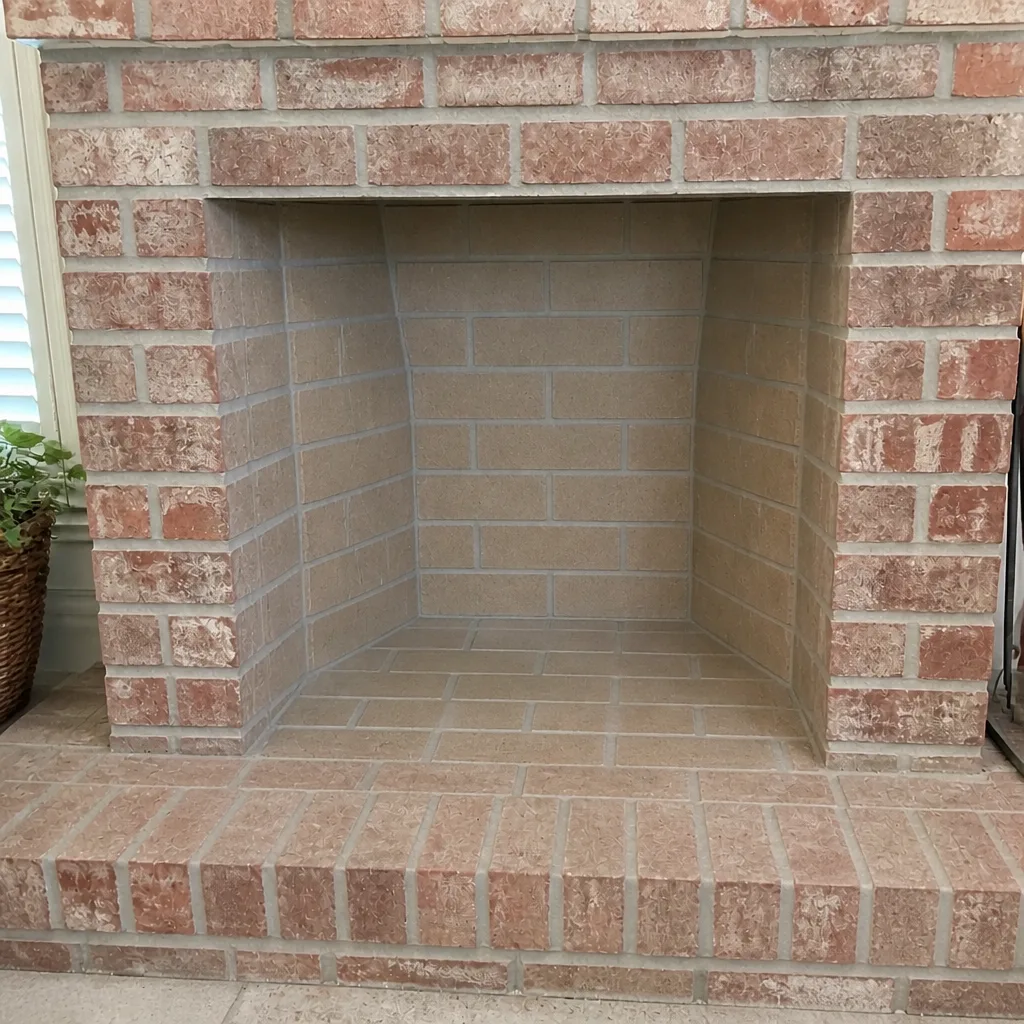
See the difference
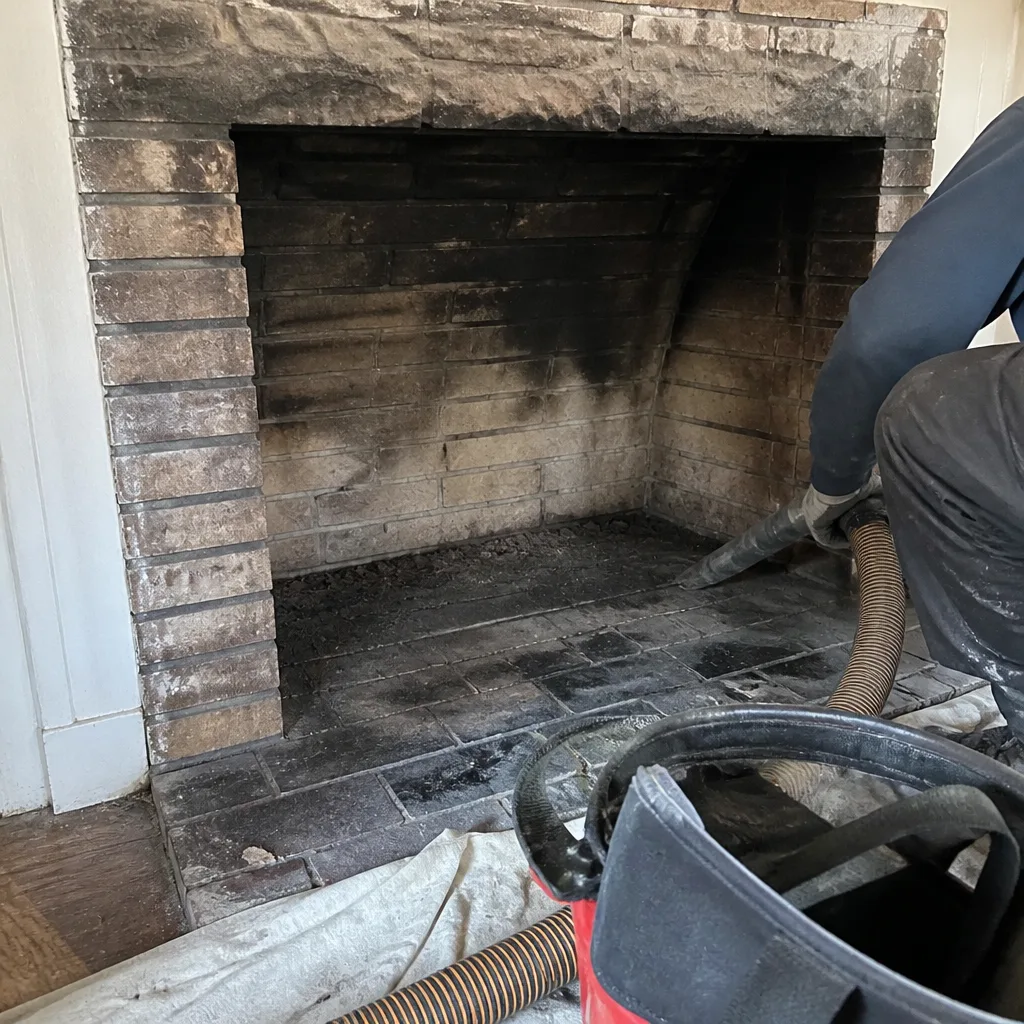 Before
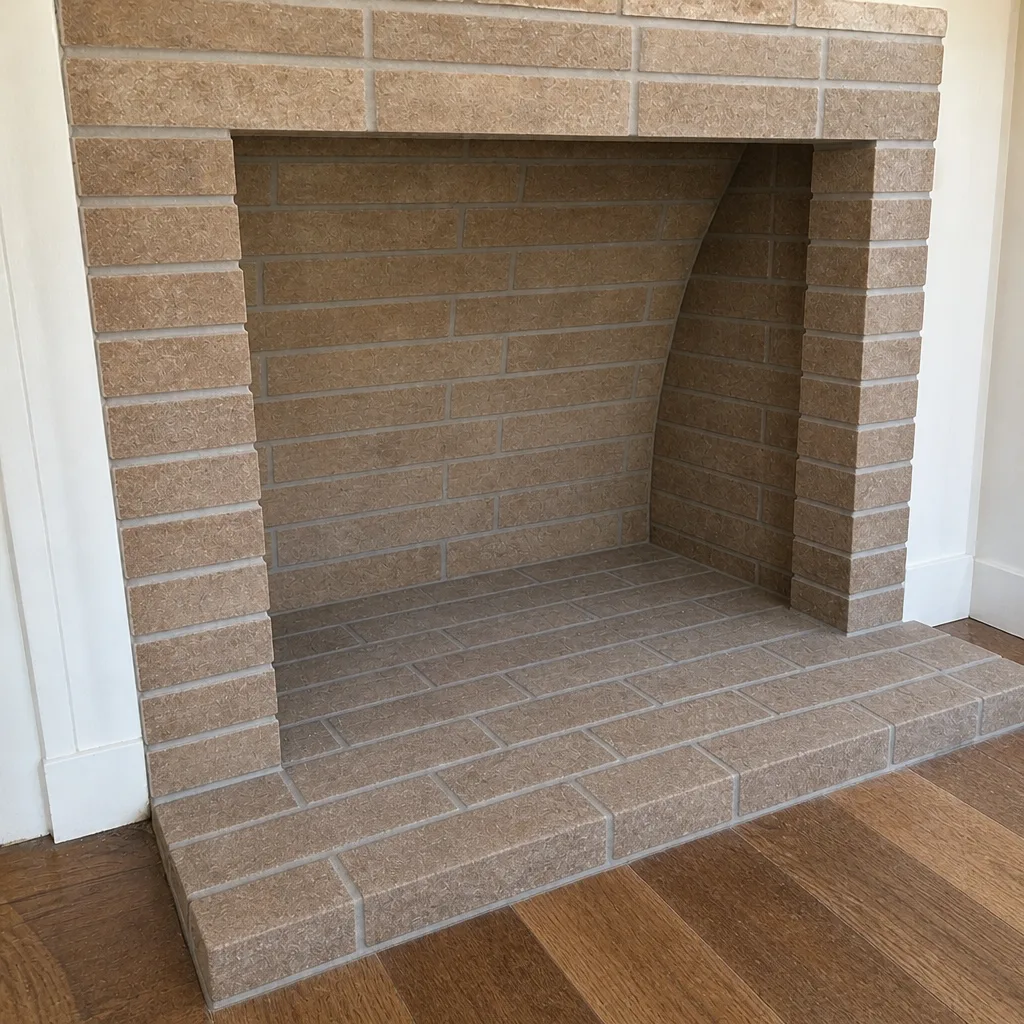 After
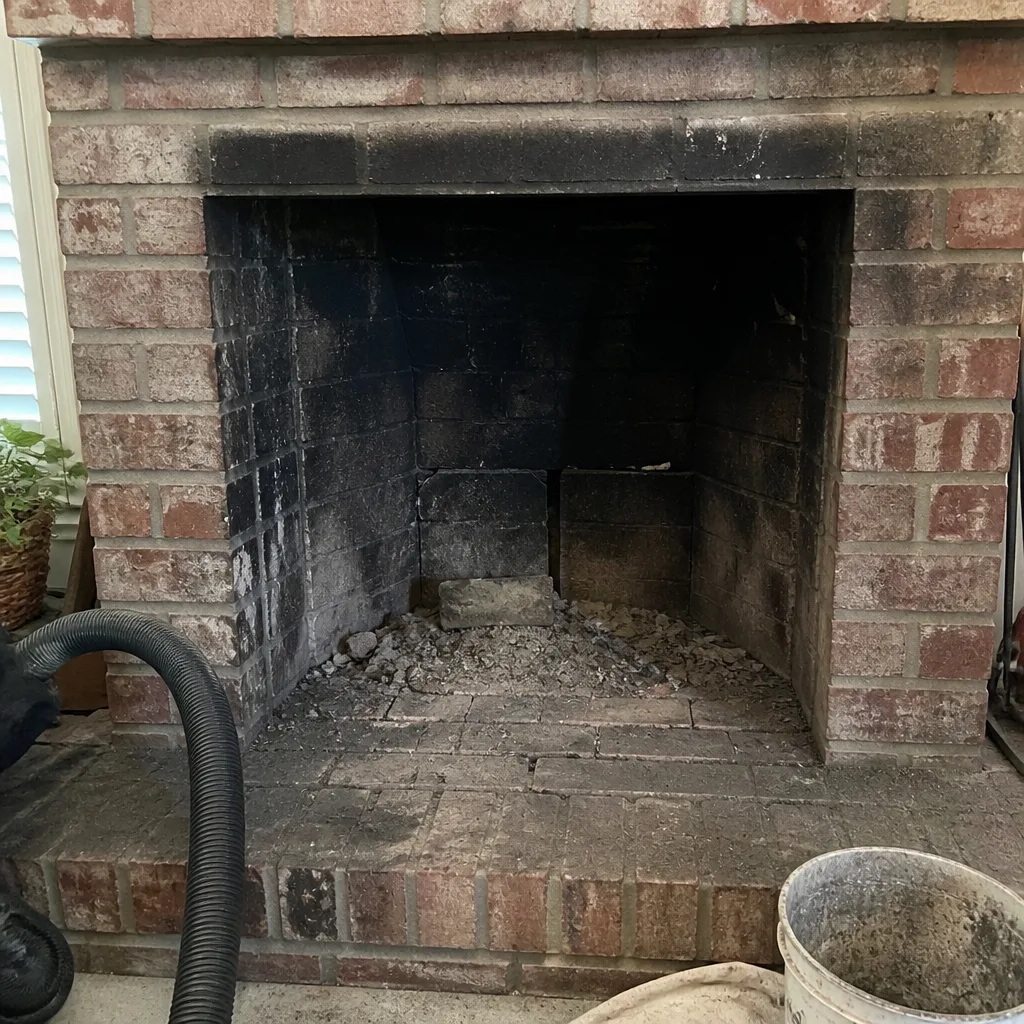 Before
 After
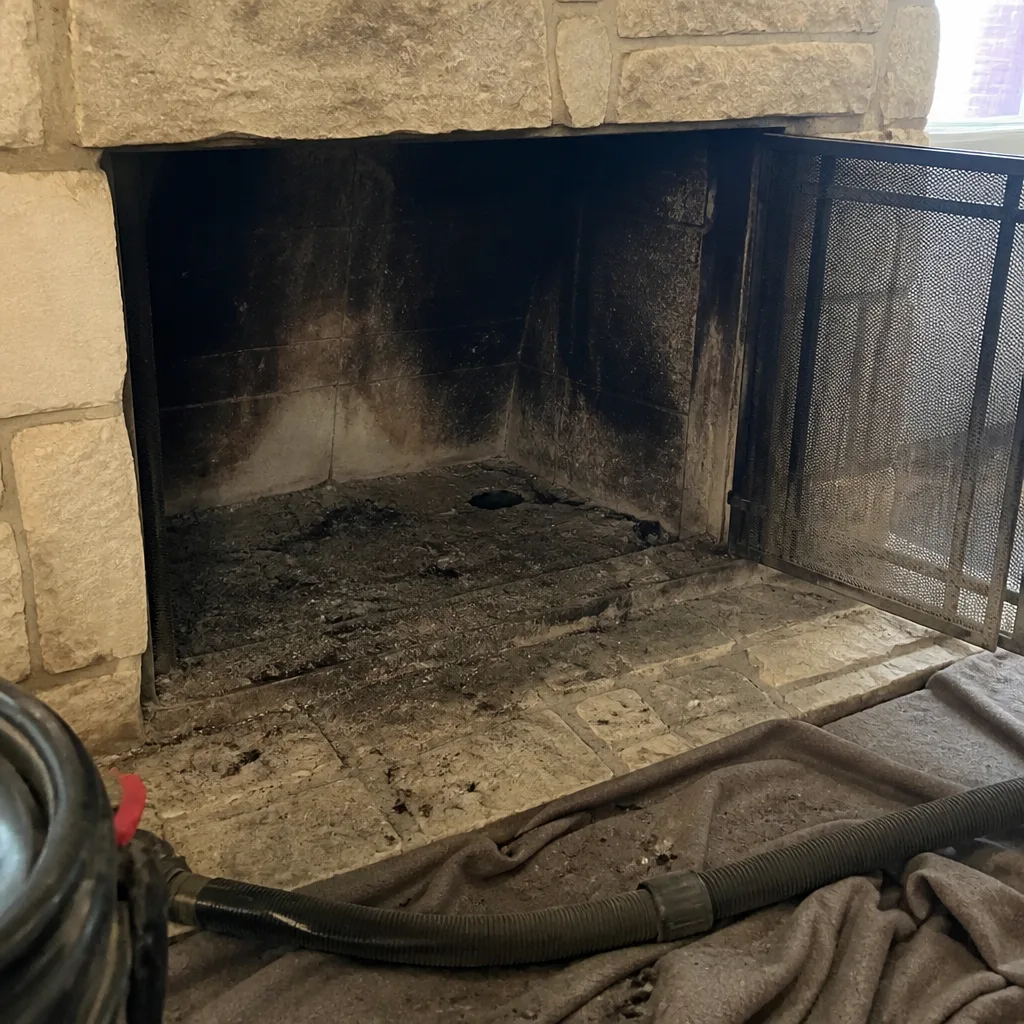 Before
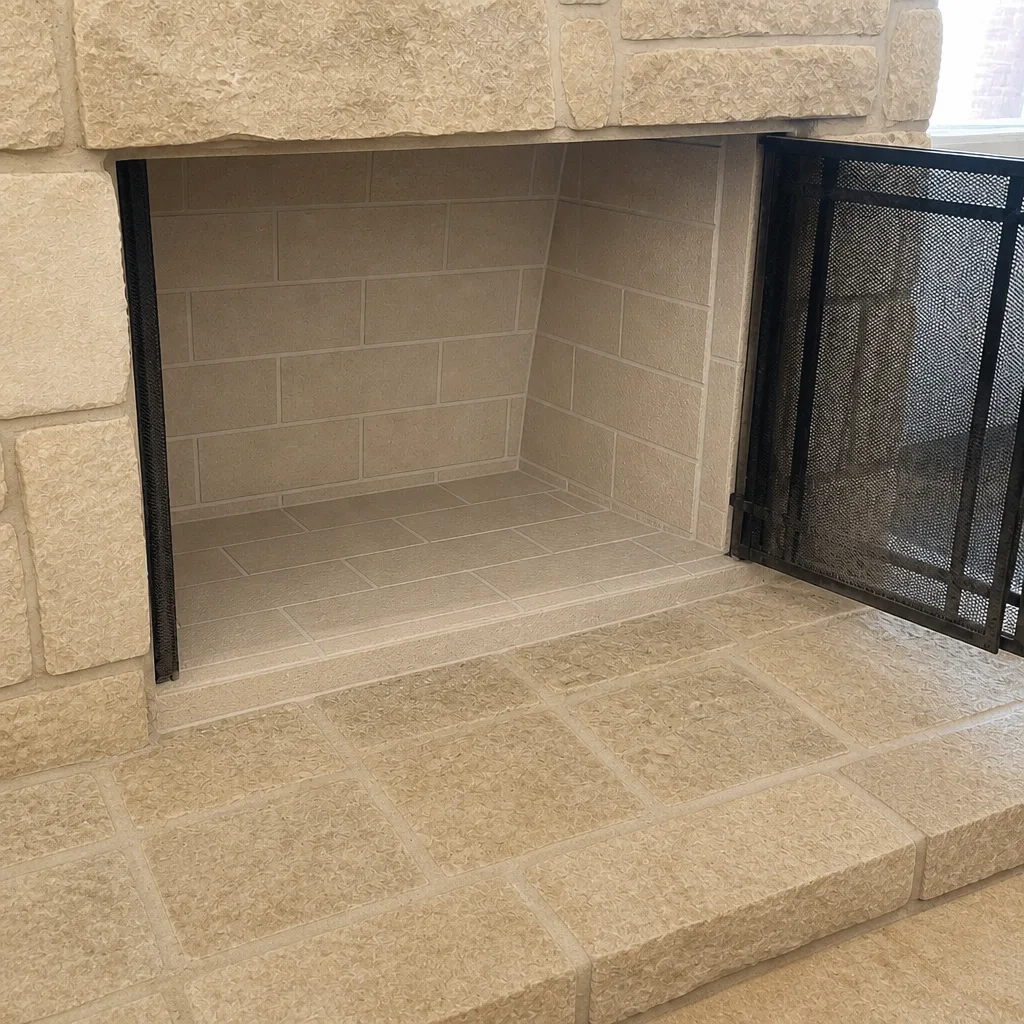 After
When to Call a Professional
Some chimney work is routine, and some of it genuinely needs a trained eye. Call a professional if you’ve never had the chimney inspected, if it’s been more than a season or two since the last sweep, if you’re buying or selling a home in Tracy, or if you’ve noticed smoke backing into the room, a persistent odor, visible cracking in the firebox or exterior, or staining on the ceiling or walls near the chimney. Also call if you’ve had a chimney fire, even a small one. These are the situations where an inspection tells you something a visual check from the living room can’t. Chimney Sweep Tracy offers free estimates in Tracy. Call (833) 766-1560. We answer 24/7. Fast dispatch from 7am to 7pm, Sunday through Friday.
Frequently Asked Questions
A standard sweep in Tracy typically falls in the range you’d expect for a Central Valley market, and the exact price depends on the configuration of your flue, the level of creosote, and whether a camera scan is included. The written estimate sets the final price, and estimates are free. Call (833) 766-1560 for an exact quote.
Once a year is the standard recommendation, and in Tracy the best time is late summer or early fall, before the first fire. That timing clears both the warm-season dust and last year’s residue, and it gives you time to schedule any repair before you need the fireplace. If you burn more heavily or notice smoke or odor issues, book sooner. Call (833) 766-1560 to schedule.
Not always. A liner is recommended when the flue is significantly deteriorated, cracked, or non-compliant, and when resurfacing won’t restore it. If the flue structure is sound, HeatShield ceramic resurfacing can extend its life without full relining. The camera scan is what determines which path is right, and you should see the footage before deciding. Call (833) 766-1560 to talk through your options.
Soot and creosote accumulate, and in a flue with an offset or a cool-drafting configuration, they can reach a stage that’s harder to remove. The bigger risk is that a developing problem, like a cracked liner or failing flashing, goes unnoticed for another season. Skipping a year isn’t catastrophic, but skipping several makes the eventual inspection more likely to find something. Call (833) 766-1560 to get back on schedule.
The brushing itself is something a careful homeowner can do with the right tools, but the inspection can’t be replicated at home. A camera scan, an assessment of creosote staging, and a written report with photos require equipment and training most homeowners don’t have. If you clean it yourself, still book an inspection. Call (833) 766-1560 to schedule one.
A standard sweep usually takes under an hour, and a Level 2 inspection with a camera scan adds time depending on the flue’s configuration and access. Complex offsets or heavy accumulation can extend it. We’ll give you a realistic time estimate when you book. Call (833) 766-1560.
The Bottom Line
Chimney care in Tracy isn’t the same as chimney care in a cold-climate guidebook. The short burn season keeps creosote accumulation moderate, but the long, dusty off-season loads the flue with debris before the first fire ever happens. That makes a pre-season sweep the one that matters most, and it makes the inspection as important as the cleaning, especially on older homes with offsets, deteriorated liners, or masonry showing the effects of clay soil. Read the report, look at the photos, and ask what can safely wait. A good contractor will tell you. Call (833) 766-1560 for a free estimate, and we’ll start with what your chimney actually needs.
Written by the team at Chimney Sweep Tracy.